


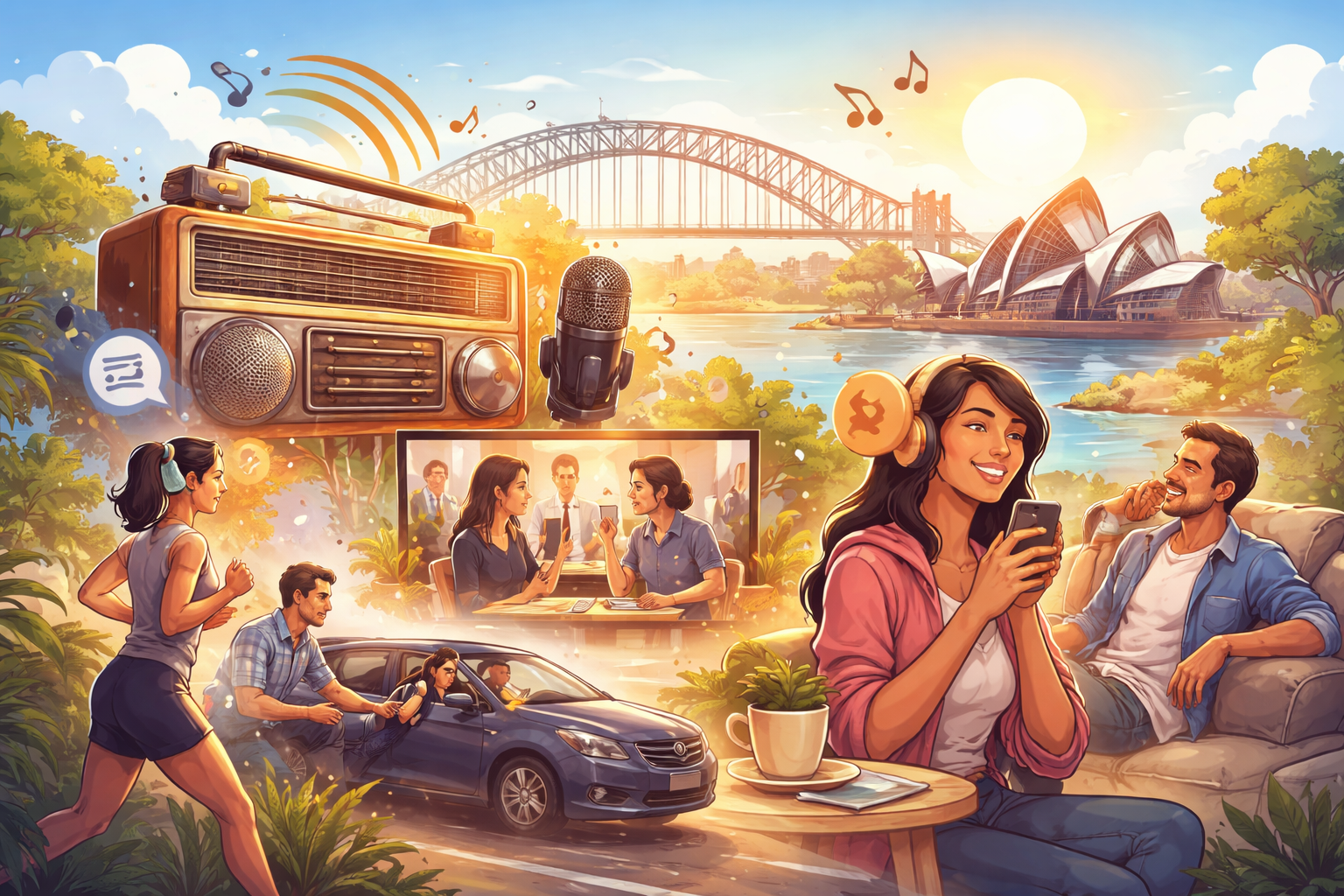
Australia is experiencing a significant rise in audio-based entertainment, with radio and podcasts becoming increasingly central to how people stay informed and entertained. Although radio has existed for generations and podcasts are relatively new by comparison, both are thriving in the current media environment. Their continued growth is being driven by changes in consumer behavior, digital access, and a growing preference for content that is flexible, engaging, and easy to fit into daily life.
Radio still holds a powerful place in Australia’s media culture. It remains one of the most accessible entertainment platforms, especially because it does not require expensive devices or constant internet use. For many Australians, radio is part of a daily routine. Breakfast programs, drive-time shows, news bulletins, and music channels continue to attract loyal listeners. Beyond entertainment, radio also plays a public service role by delivering emergency information, especially in areas affected by bushfires, floods, or other regional disruptions. This combination of utility and entertainment helps preserve its relevance.
Podcasts have added a new dimension to Australia’s audio landscape. Their popularity has surged because they give audiences more freedom than traditional broadcasting formats. Instead of following a station timetable, listeners can choose specific topics and episodes according to their own preferences. This makes podcasts ideal for modern lifestyles, where people often consume media in fragments throughout the day. The on-demand nature of podcasts allows them to serve audiences who want depth, specialization, and convenience all at once.
One reason podcasts have grown so effectively in Australia is the range of subjects available. There are programs focused on social issues, business, education, storytelling, health, parenting, technology, sports, and humor. This broad appeal means podcasts are no longer a niche form of media. They have become part of mainstream entertainment and information consumption. Australians are increasingly using podcasts not just for leisure, but also for learning and professional development.
At the same time, radio has adapted rather than declined. Many stations now offer digital streaming, mobile apps, catch-up content, and interview clips on demand. This shows that radio broadcasters understand the need to meet listeners on multiple platforms. In many cases, the gap between radio and podcasts is narrowing. A radio interview may later be released as downloadable content, while a podcast host may appear on live radio. These overlaps reflect a more integrated audio ecosystem.
Australian audiences are also responding to authenticity. People often prefer hosts and creators who feel genuine, relatable, and culturally familiar. Radio presenters build this connection through live interaction and regular listening habits. Podcast hosts build it through intimate, focused conversations and storytelling. In both cases, the relationship between creator and audience is central. This emotional connection helps explain why listeners remain loyal to certain shows over long periods.
The role of technology has been critical in strengthening both formats. Smart speakers, streaming platforms, smartphones, and connected vehicles have made access smoother and more immediate. Audio content can now move with the listener throughout the day, whether at home, in transit, or at work. This portability gives radio and podcasts a strong advantage in an era where convenience heavily influences media choices.
From a commercial perspective, the popularity of these formats has created new opportunities. Advertisers value audio because it reaches people in personal, often distraction-free moments. Local radio continues to be effective for community-based campaigns, while podcasts are attractive for targeted sponsorship and branded partnerships aimed at specific audience groups.
The growing appeal of radio and podcasts in Australia reveals how entertainment is evolving. Audiences increasingly value media that fits naturally into everyday life while still delivering enjoyment, insight, and connection. In that environment, audio is becoming more important, not less, as a trusted and versatile form of modern entertainment.