

Aged care in Australia spans a continuum designed to match support to need. At the light‑touch end, the Commonwealth Home Support Programme enables older people to remain in their homes with services such as domestic assistance, transport, meals, personal care, and social groups. These practical supports are preventive: they stabilize daily life, reduce hospitalizations, and sustain independence.
Home Care Packages escalate the intensity and coordination. A Level 1 package might cover basic personal care and cleaning, while Level 4 can fund nursing, allied health, complex wound management, continence support, and significant equipment or home modifications. Packages are consumer‑directed; people compare providers, set goals, and review budget statements to ensure value.
Residential aged care is appropriate when 24/7 oversight is needed. Facilities deliver personal care, medication management, clinical monitoring, allied health, and lifestyle programs. Many homes include secure memory‑support units with sensory gardens, wayfinding cues, and staff trained in non‑pharmacological dementia strategies such as music therapy, validation techniques, and individualized routines to reduce distress.
Short‑term programs fill critical gaps. Respite care provides temporary relief to family carers, planned or emergency. Transitional care supports recovery following a hospital stay, blending therapy, nursing, and care planning to restore function. Reablement—a time‑limited, goal‑oriented approach—helps people regain skills after illness, distinct from ongoing maintenance care.
Palliative and end‑of‑life care are embedded across settings. Early palliative involvement focuses on symptom control, advance care planning, and emotional support; later, it ensures comfort and dignity, whether at home or in a facility. Coordinated teams—GPs, nurses, palliative specialists, social workers, spiritual care—align treatment with values and preferences.
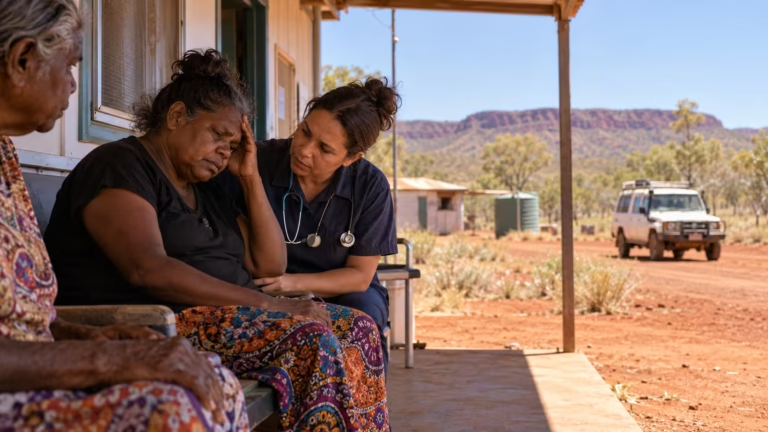
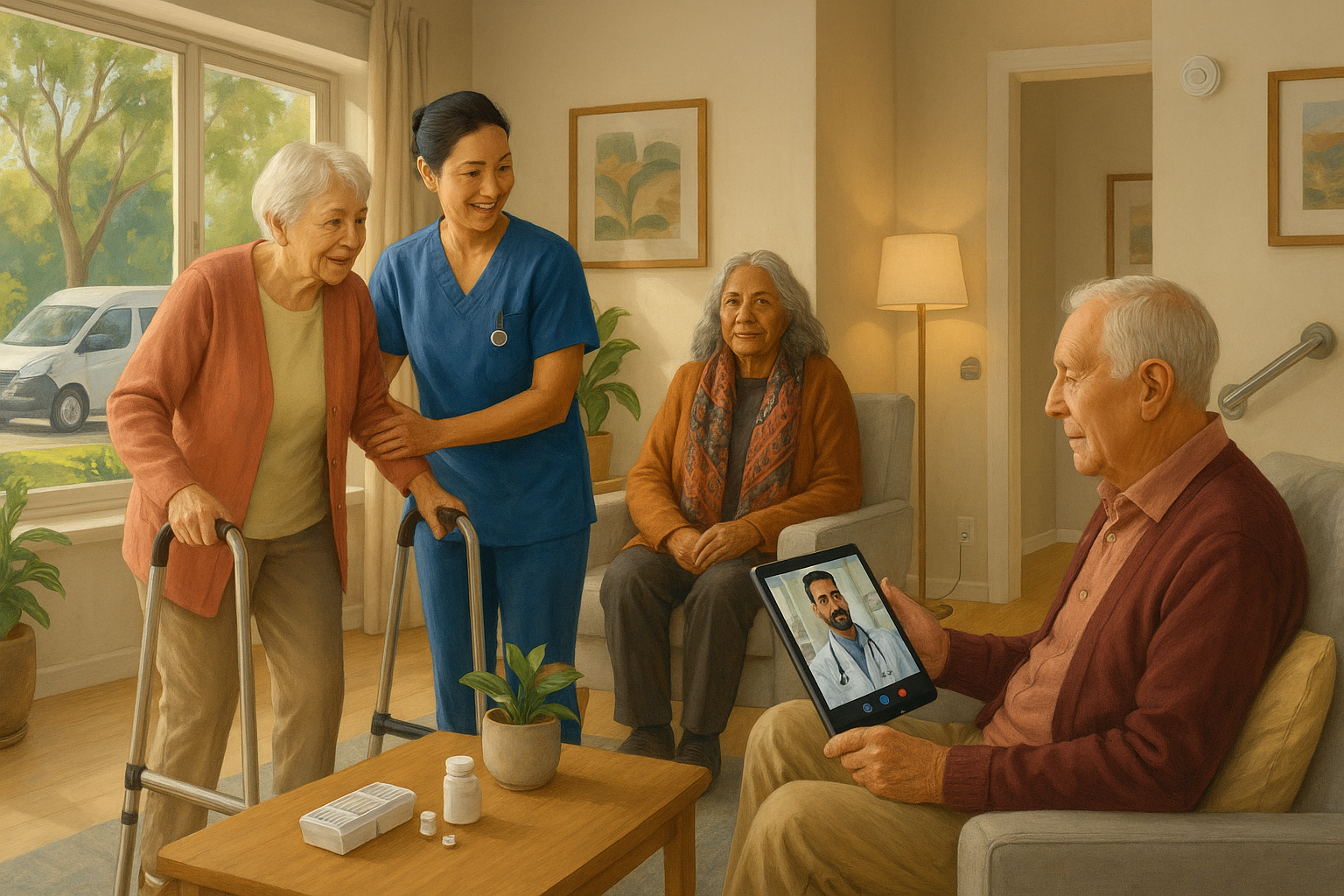
Technology amplifies care. Telehealth keeps specialists accessible; electronic care plans and medication charts improve safety; remote monitoring flags early deterioration; and simple aids—grab rails, sensor lights, shower chairs—prevent falls. For rural communities, mobile allied health clinics and virtual case conferences reduce travel barriers and accelerate decision‑making.
Quality hinges on skilled, stable staff. Providers invest in dementia capability, wound care, continence management, and culturally safe practice. Strong clinical governance and family communication build trust, while published star ratings and incident data help consumers compare services. When combined—fit‑for‑purpose funding, skilled staff, and consumer‑directed planning—these models allow older Australians to live where they prefer, supported with compassion and competence.