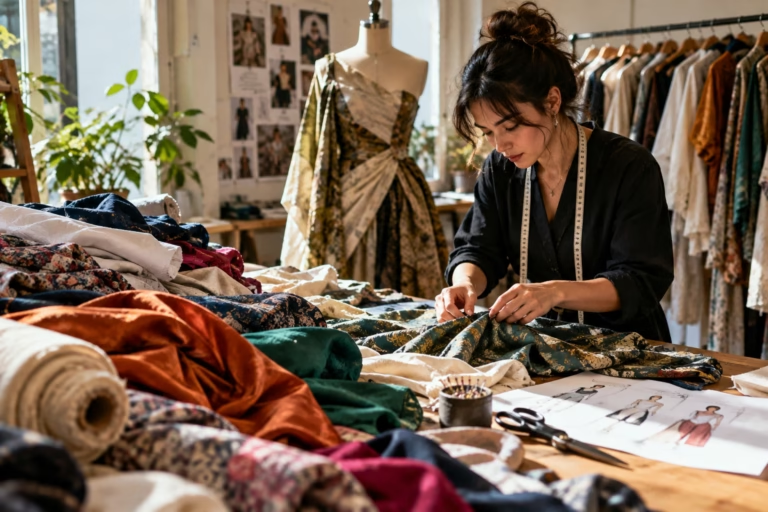


The fashion industry in Australia is increasingly embracing sustainability through the use of local, natural resources. With environmental concerns rising, designers are turning to fibers, plants, and traditional techniques that minimize ecological impact and enhance regional craftsmanship. This approach reflects a holistic understanding of fashion as both an art form and a vehicle for ecological responsibility.
Merino wool, sourced from Australian sheep, remains a staple in eco-fashion. Its natural breathability, temperature regulation, and biodegradability make it ideal for environmentally conscious garments. By supporting local farms, designers also ensure animal welfare, sustainable land management, and the strengthening of regional economies. Wool-based garments offer durability and timeless style, aligning with slow fashion principles.
Organic cotton cultivation is another essential element. Avoiding synthetic pesticides and fertilizers, organic cotton farming encourages healthy soils and reduces water pollution. This fabric is widely used in casual wear, children’s clothing, and premium fashion lines. Its softness and adaptability make it a favorite among designers focused on both sustainability and comfort, while local production reduces carbon emissions associated with long-distance shipping.
Hemp is increasingly popular among Australian sustainable designers due to its low environmental footprint. The fiber is strong, naturally resistant to pests, and grows rapidly with minimal water. Hemp textiles are versatile and suitable for trousers, jackets, and everyday wear. Designers often blend hemp with wool or cotton, achieving textures that are both innovative and environmentally responsible.
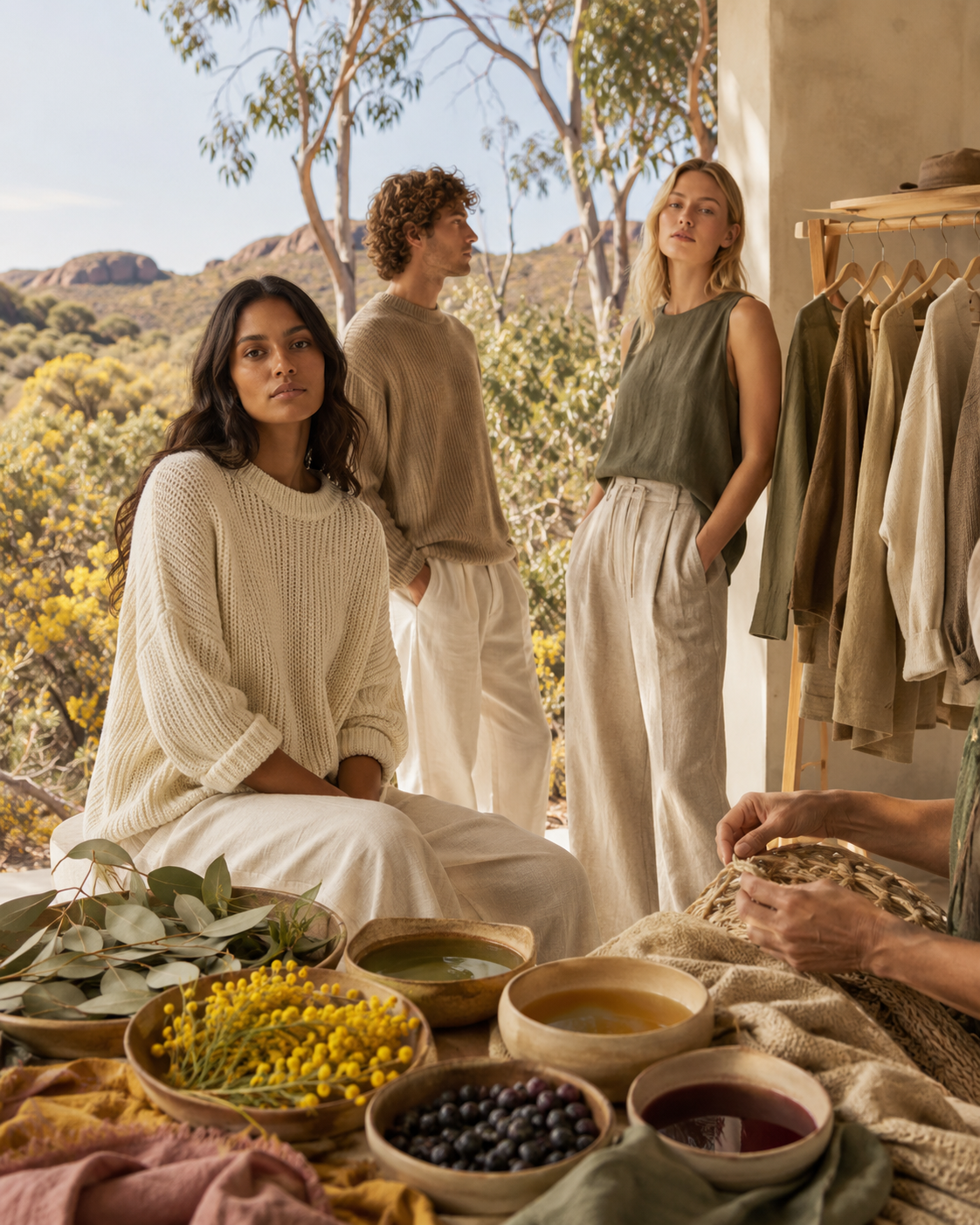
Dyeing with native plants adds a further layer of sustainability and storytelling. Extracts from eucalyptus leaves, wattle bark, and native berries offer a spectrum of earthy tones without the environmental hazards of synthetic dyes. These natural colors also reflect the unique landscapes of Australia, creating a strong connection between garment and geography.
Collaboration with Indigenous communities enhances both the cultural and ecological value of Australian fashion. Traditional techniques in weaving, embroidery, and dyeing are incorporated into contemporary designs, preserving cultural knowledge while emphasizing ethical production. These partnerships foster social responsibility and celebrate local heritage, creating garments that are as meaningful as they are sustainable.
Through the use of locally sourced wool, organic cotton, hemp, and plant-based dyes, Australian designers are redefining fashion as a force for environmental and social good. Each piece embodies a commitment to sustainability, craftsmanship, and cultural appreciation, demonstrating how eco-conscious fashion can thrive in harmony with the natural world.