

Food festivals across Australia provide an exciting window into the nation’s diverse culinary world. They are places where people gather to taste regional dishes, discover new ingredients, meet producers, and enjoy the traditions of different communities. Australia’s food culture cannot be described by one dish or one cooking style. It is a mixture of Indigenous knowledge, British colonial influence, Asian and Mediterranean migration, modern café culture, fresh seafood, agricultural produce, and contemporary creativity.
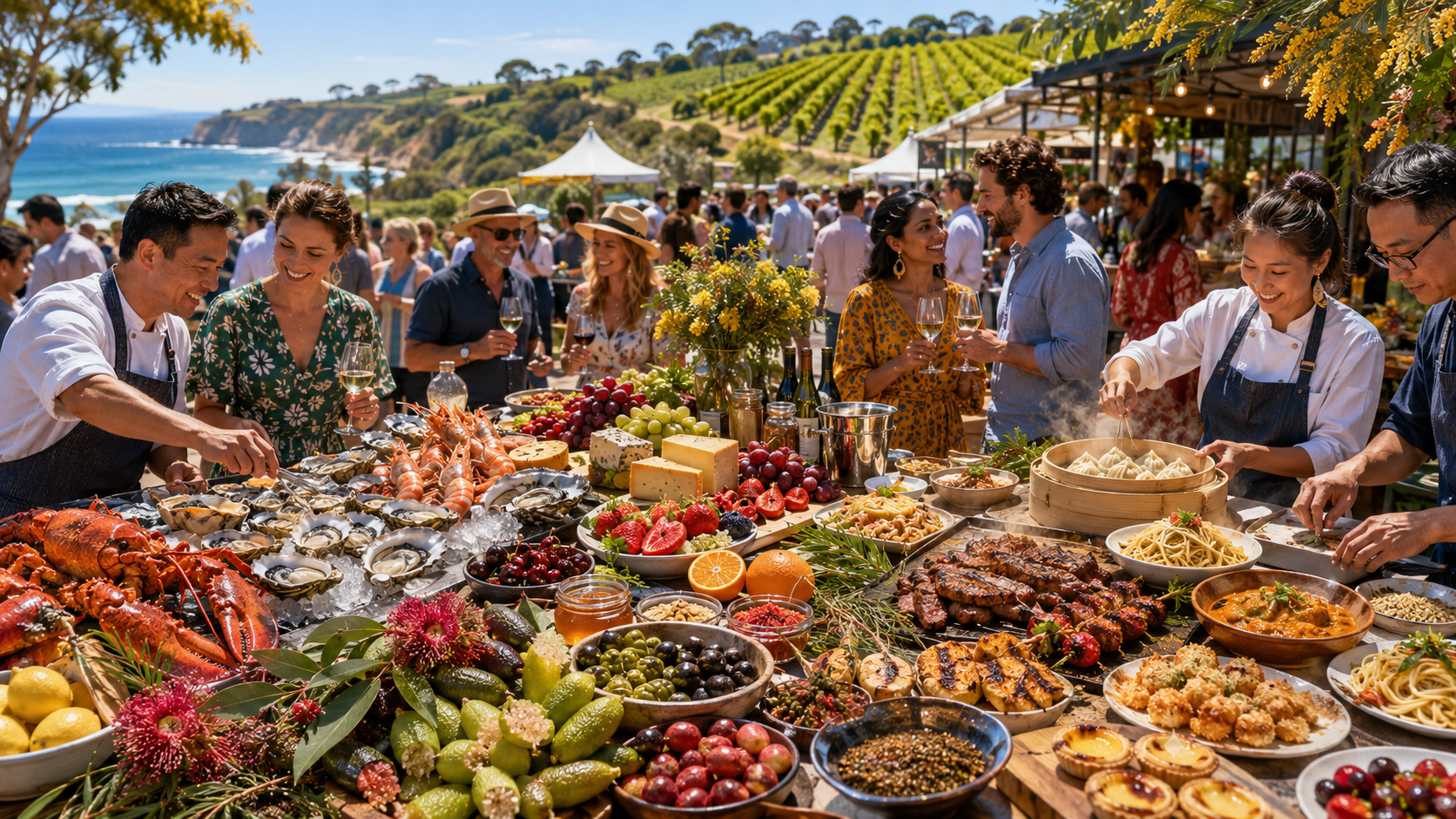
One reason these festivals are so appealing is the quality of Australian ingredients. Many events are built around local produce, allowing visitors to taste food close to its source. In coastal areas, seafood festivals celebrate the freshness of the surrounding waters. Oysters, prawns, fish, mussels, scallops, and lobster are often served grilled, chilled, fried, smoked, or prepared in creative modern dishes. These festivals help visitors appreciate the importance of responsible fishing, aquaculture, and coastal livelihoods.
Regional harvest festivals offer a different but equally meaningful experience. In areas known for fruit, dairy, grains, meat, or vegetables, festivals often include farmers’ markets, tastings, cooking classes, and producer talks. Guests might sample handmade cheese, fresh berries, apple cider, olive oil, sourdough, preserves, honey, roasted meats, or seasonal vegetables. Such events make food feel personal because customers can speak directly with the people who grow, raise, bake, or craft what they are eating.
Australia’s wine and gourmet festivals are another important part of the culinary calendar. Wine regions such as the Barossa Valley, Hunter Valley, Yarra Valley, Margaret River, and McLaren Vale are known for combining scenic landscapes with strong food traditions. Festivals in these areas often include cellar-door tastings, vineyard lunches, live music, masterclasses, and menus designed by local chefs. Food and wine pairing is a major attraction because it teaches visitors how flavors interact. A crisp white wine may match seafood, a bold red may suit grilled meat, and a dessert wine may enhance fruit or chocolate.
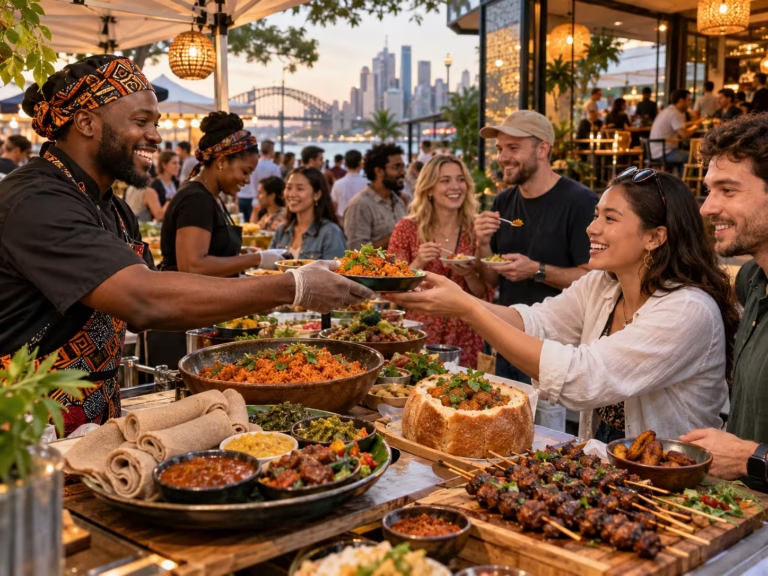
The multicultural character of Australia gives its food festivals exceptional variety. Many urban festivals celebrate cuisines brought by migrant communities. Italian, Greek, Chinese, Indian, Vietnamese, Lebanese, Malaysian, Korean, Japanese, and many other food traditions have become part of everyday Australian dining. At festivals, these cuisines are often presented through street food, family recipes, sweets, drinks, and cultural performances. This creates a welcoming atmosphere where food becomes a form of storytelling.
Native Australian foods also deserve special attention. More festivals are now showcasing ingredients that have been used by First Nations peoples for generations, including finger lime, lemon myrtle, wattleseed, bush tomato, pepperberry, quandong, and saltbush. These foods offer flavors that are unique to the Australian environment. They may appear in cakes, sauces, teas, marinades, spice rubs, salads, and restaurant-style dishes. Their growing presence encourages respect for Indigenous food knowledge and sustainable use of native plants.
Beyond taste, food festivals bring economic and social benefits. They attract tourists, support small businesses, create seasonal employment, and encourage collaboration between chefs, farmers, artists, and local councils. They also give communities a reason to gather and celebrate what makes their region distinctive.
Australia’s food festivals are memorable because they combine enjoyment with education. Visitors leave with full stomachs, but also with a better understanding of local landscapes, cultural histories, farming practices, and culinary innovation. These festivals prove that food is not only something to consume; it is a powerful expression of place, identity, and shared experience.