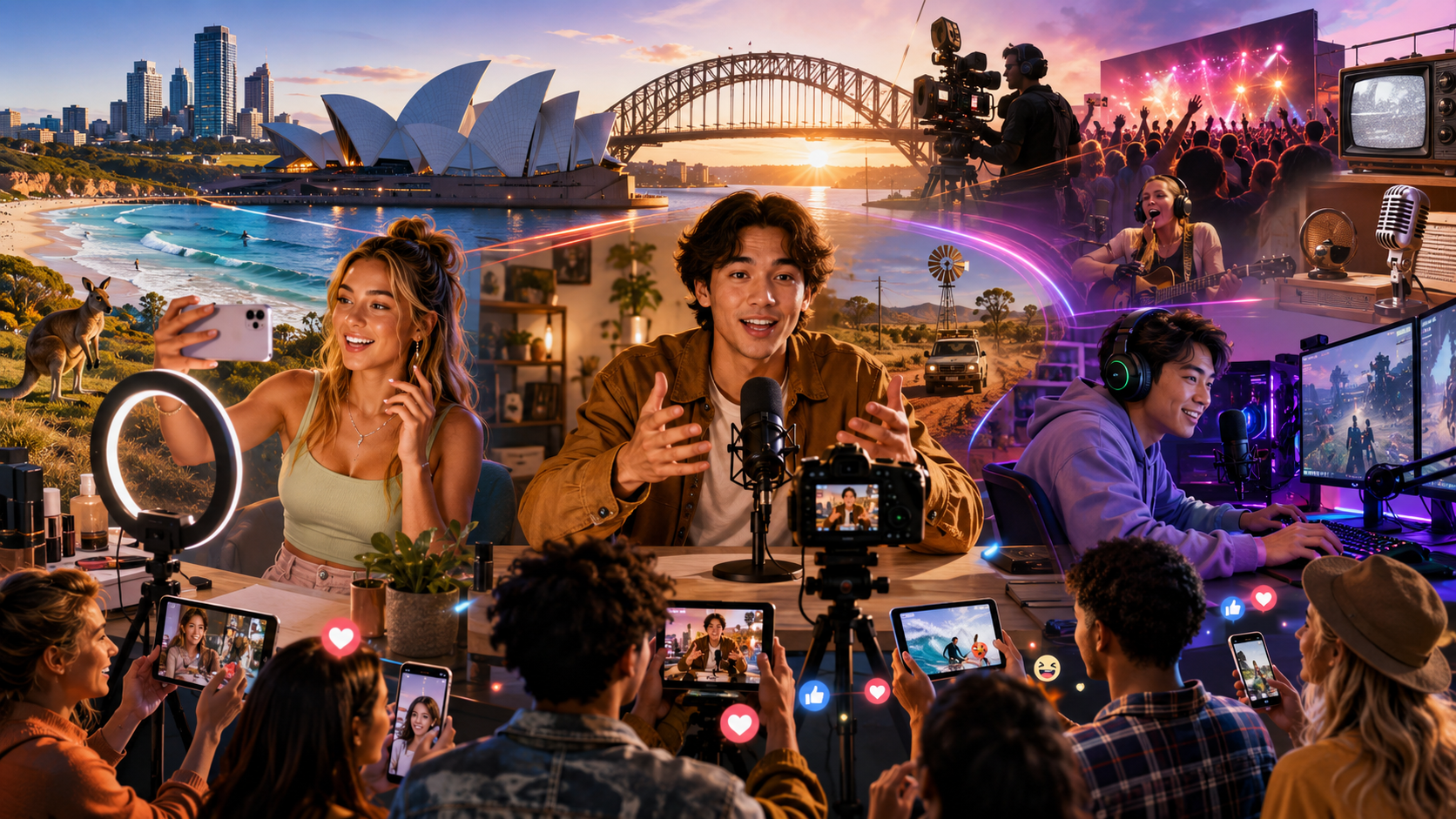
Influencers and YouTubers have become powerful figures in Australian entertainment because they understand how people now consume media. Instead of relying only on scheduled programs, cinema releases, or printed entertainment news, audiences increasingly choose content that is available instantly and feels personally relevant. Online creators meet this demand by producing videos, posts, livestreams, podcasts, and short clips that can be watched anywhere and shared quickly.
Their influence begins with relatability. Many successful Australian influencers build their appeal by presenting themselves as approachable and authentic. They talk about ordinary experiences such as studying, working, travelling, exercising, shopping, cooking, dating, parenting, or dealing with stress. This makes their entertainment feel close to real life. While traditional celebrities may seem distant, influencers often feel like people audiences know personally, even when they have large followings.
YouTubers add depth to this digital culture through longer and more detailed content. A creator can review Australian music festivals, discuss reality television, film travel adventures across the country, create comedy sketches, or document personal challenges. These videos often mix entertainment with information. Viewers are not only amused; they also learn about places, products, events, opinions, and social issues. This combination of enjoyment and usefulness is one reason YouTube remains important in the entertainment ecosystem.
Influencers also help connect entertainment with commerce. In Australia, marketing campaigns frequently use creators to promote films, streaming shows, concerts, tourism experiences, fashion collections, food brands, games, and lifestyle products. The advantage is that creators usually speak to well-defined communities. A fitness influencer can reach health-focused followers, a gaming YouTuber can reach esports fans, and a family vlogger can reach parents. This targeted communication is more personal than general advertising.
The role of influencers is also cultural. They contribute to what people talk about, what jokes become popular, what destinations become fashionable, and what entertainment products gain attention. A single viral video can introduce thousands of viewers to a song, event, restaurant, fashion trend, or social issue. Australian online creators often blend global internet culture with local humour, accents, landscapes, and social experiences, helping create a distinct digital entertainment identity.
Representation is another major benefit. Online entertainment gives opportunities to people who may not have easy access to traditional media industries. Creators from different ethnic backgrounds, regional communities, Indigenous communities, and underrepresented groups can share their voices directly. This broadens the range of Australian stories available to audiences and challenges older ideas of who gets to be visible in entertainment.
However, the power of influencers must be matched with responsibility. Paid promotions should be clearly disclosed so followers can judge content fairly. Creators also need to consider how their messages affect young audiences. Content about beauty, wealth, body image, relationships, and lifestyle can influence self-esteem and behaviour. Ethical digital entertainment requires honesty, transparency, and awareness of audience impact.
Influencers and YouTubers are no longer separate from Australian entertainment; they are part of its structure. They promote content, create trends, support businesses, entertain communities, and provide alternative pathways into media careers. Their success shows that modern entertainment depends not only on production quality but also on trust, personality, interaction, and the ability to speak directly to audiences.