


Health promotion in Australia has become a key part of building a healthier and more informed society. Through public education programs, Australians are encouraged to understand health risks, prevent disease, and seek support when needed. These programs are delivered by government agencies, healthcare providers, schools, charities, community groups, and digital platforms. Together, they help turn complex health information into messages that ordinary people can understand and use.
A major purpose of health education is to prevent illness before it becomes severe. Many Australian programs focus on chronic disease prevention because conditions such as heart disease, diabetes, cancer, and respiratory illness can be linked to lifestyle and environmental factors. Public messages often encourage healthier eating, regular physical activity, smoking prevention, safer alcohol consumption, and early medical screening. These campaigns aim to help people see health as something they can actively manage.
Smoking education is one of the strongest examples of Australia’s preventive health approach. Public campaigns have long warned people about the dangers of tobacco, including lung cancer, heart attacks, strokes, and long-term breathing problems. At the same time, services such as Quitline provide practical support for people trying to stop smoking. This makes the education more effective because it combines awareness, motivation, and direct assistance.
Another widely recognized area is sun safety. Due to strong ultraviolet exposure, Australians are often reminded to protect themselves from skin damage. Programs such as SunSmart promote simple actions: using sunscreen, wearing protective clothing, putting on a broad-brimmed hat, using sunglasses, and staying in shaded areas. These messages are especially important for children, outdoor workers, athletes, and people who spend time at beaches or parks.
Immunisation education also contributes to public safety. Australia’s vaccination programs explain how vaccines reduce the spread of preventable diseases and protect vulnerable members of the community. Parents and carers receive information about childhood vaccines, while adults are encouraged to stay informed about recommended immunisations throughout life. Good public education helps reduce fear, answer questions, and respond to misinformation.
Mental health awareness is another important part of health promotion. Public programs encourage people to recognize emotional distress, talk about mental wellbeing, and seek professional help when necessary. Campaigns supported by organizations such as Beyond Blue, headspace, and Lifeline have helped make mental health discussions more common. These efforts are especially valuable for young people, older adults, rural communities, and anyone facing isolation or stress.
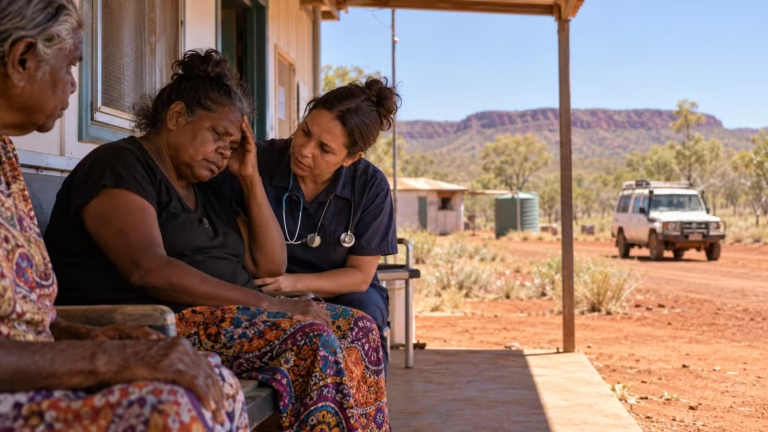
Australia’s cultural diversity means that health education must be inclusive. Messages need to reach people who speak different languages, have different health beliefs, or face barriers to healthcare access. Many programs therefore use translated resources, community educators, multicultural media, and partnerships with local organizations. For Aboriginal and Torres Strait Islander peoples, effective health education should be community-led, culturally respectful, and connected to broader social wellbeing.
Technology has made public health education faster and more accessible. People can now find information through government websites, health apps, online campaigns, webinars, and social media. However, the growth of online information also creates challenges because false or confusing health claims can spread quickly. Trusted institutions must therefore provide clear, accurate, and easy-to-read resources.
Health education in Australia shows that public awareness can influence behaviour in meaningful ways. When people understand the reasons behind health recommendations, they are more likely to follow them. By combining prevention, cultural sensitivity, digital communication, and community support, Australia’s health education programs help people make safer and healthier choices.