
The story of Australian food did not begin with colonial kitchens or modern cafés. It began with the First Peoples of the continent, whose food traditions developed over tens of thousands of years. These traditions were shaped by climate, Country, migration patterns of animals, flowering seasons, and careful observation of plants. Many native dishes and ingredients were later overlooked by mainstream society, but they remain an important part of Indigenous heritage. Reviving them today allows Australians and global food lovers to understand the depth of the country’s original cuisine.
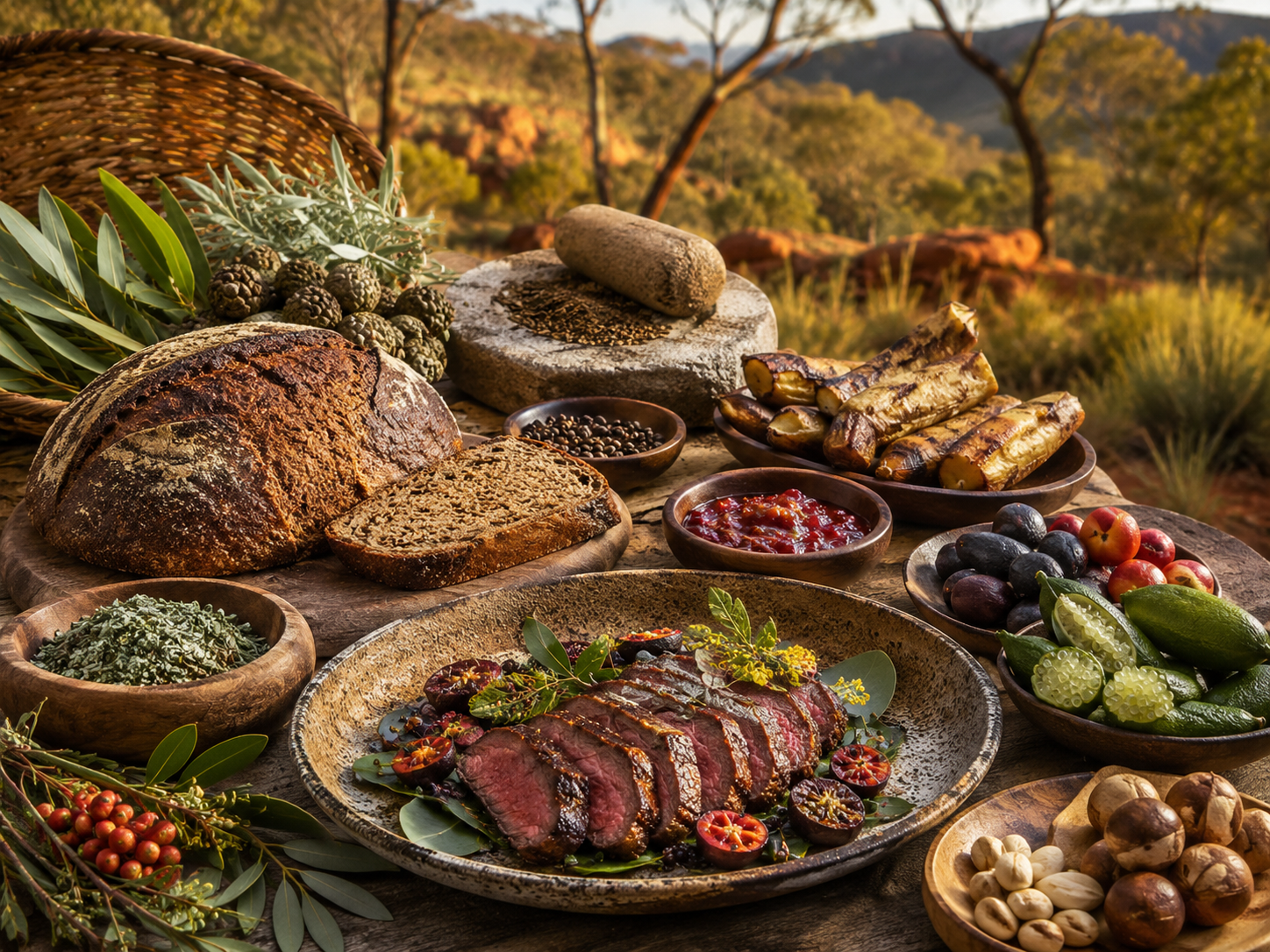
One of the best-known ancient ingredients is wattleseed. Traditionally, certain edible acacia seeds were gathered, processed, and ground into meal. This meal could be mixed with water and cooked into flatbread or cake-like food. In contemporary kitchens, wattleseed is loved for its roasted, nutty flavour and is often added to bread, biscuits, chocolate desserts, and warm drinks. Its return shows how an ancient staple can be adapted without losing its identity.
Murnong, commonly called yam daisy, is another powerful example. Before grazing animals damaged many of its growing areas, murnong was a widely used root food in parts of Australia. The tubers were cooked in ashes or earth ovens until tender. Their flavour has been compared to sweet root vegetables, making them suitable for roasting, mashing, or serving with native herbs. Restoring interest in murnong also encourages restoration of native landscapes.
Australia’s old food culture included many fruits that deserve greater attention. Quandong has a bright tartness that works beautifully in jams and sauces. Kakadu plum is famous for its strong flavour and high vitamin C content. Finger lime provides tiny citrus pearls that can lift seafood, salads, and desserts. Lemon myrtle adds a fresh lemon scent, while native pepperberry gives heat and complexity. Saltbush, with its naturally salty leaves, can season meats, vegetables, and breads.
Traditional preparation methods were closely linked to the environment. Foods were roasted on coals, baked underground, dried in the sun, or smoked for flavour and preservation. Seeds and nuts were crushed with stones. Bunya nuts, collected during important seasonal gatherings, could be eaten roasted or turned into a paste. Fish and eels were harvested through traps that required advanced knowledge of water movement and animal behaviour.
Modern versions of ancient recipes might include wattleseed damper, roasted murnong with saltbush, kangaroo seasoned with pepperberry, bunya nut cakes, or quandong fruit sauce. These dishes can teach people that native Australian cuisine is rich, practical, and sophisticated. They also show that traditional foods can support sustainable eating because many native plants are well adapted to Australian conditions.
Respect must guide this revival. Native foods are connected to Indigenous knowledge systems, not just flavour profiles. Anyone using them should learn their background, avoid cultural appropriation, and support Indigenous-led farms, food brands, educators, and chefs. By doing this, ancient recipes can return to the table in a way that honours the people who kept them alive.