
Australia’s Accessibility Strategy Goes Beyond Physical Mobility
Australia’s tourism industry is gradually broadening its understanding of what makes a destination genuinely accessible.
While wheelchair ramps, elevators and adapted accommodation remain essential, inclusive tourism increasingly considers the requirements of visitors with hearing differences, vision impairments, autism and other sensory or cognitive needs.
This shift encourages destinations to provide clearer communication, flexible visitor arrangements and environments that accommodate a wider range of abilities.
Tourism Australia distinguishes accessible tourism, which focuses on removing participation barriers, from inclusive tourism, which also emphasises creating welcoming experiences.
The distinction matters because a destination may offer suitable physical facilities while still presenting challenges for visitors who require reduced noise, additional guidance or alternative communication formats.
Phillip Island Provides a Model for Inclusive Wildlife Tourism
Phillip Island in Victoria has developed accessibility provisions for its internationally recognised Penguin Parade.
Visitors gather to watch little penguins return to their coastal burrows after spending the day at sea.
For some travellers, however, crowded viewing areas, unfamiliar surroundings and intense sensory stimulation can complicate the experience.
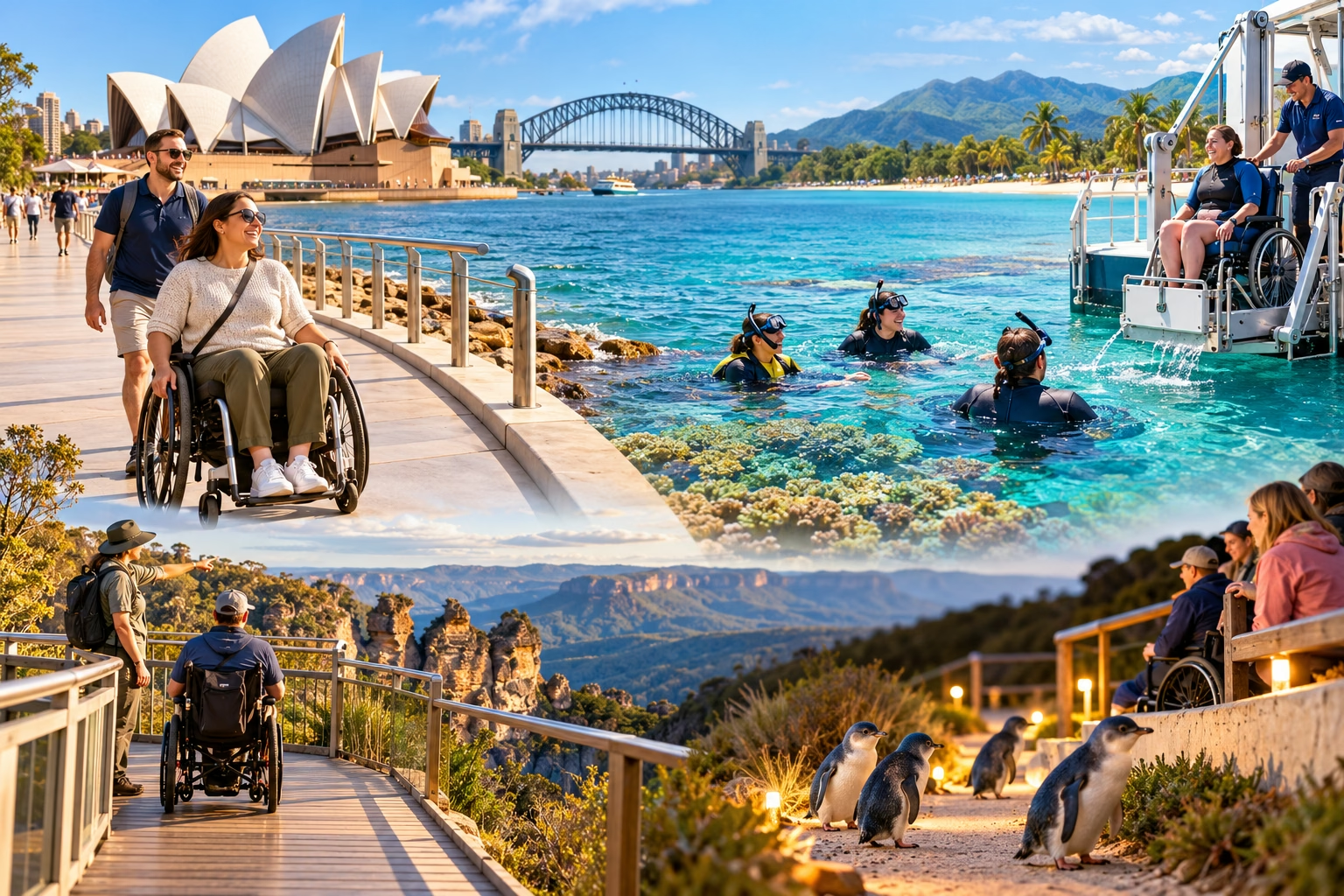
The attraction provides accessibility arrangements for wheelchair users alongside sensory-support equipment, quieter areas and services designed for visitors with additional needs.
Victoria’s official tourism resources highlight sensory bags containing noise-cancelling headphones and other supportive materials.
These measures demonstrate how wildlife attractions can preserve their natural appeal while improving visitor comfort and participation.
Sydney’s Cultural Institutions Support Different Visitor Requirements
The Sydney Opera House offers another example of inclusive tourism development.
Its mobility access tours provide alternatives to conventional routes through the building, allowing more visitors to experience one of Australia’s most recognisable architectural landmarks.
Selected relaxed performances accommodate audiences who may benefit from adjusted sensory conditions and more flexible theatre arrangements.
Other Australian cultural institutions also provide specialised experiences for visitors with vision or hearing requirements.
Such developments highlight the importance of recognising that accessibility encompasses communication, social participation and psychological comfort alongside physical movement.
Australia’s Natural Destinations Become More Inclusive
Nature-based tourism is another area where accessible facilities are changing travel possibilities.
In Queensland, Quicksilver Cruises provides specially equipped access to the Great Barrier Reef, including a water-powered lift at its Agincourt Reef pontoon.
The Blue Mountains feature wheelchair-friendly sightseeing routes, while selected walking tracks in Uluru-Kata Tjuta National Park allow visitors with mobility limitations to explore remarkable desert landscapes.
These experiences demonstrate that accessibility does not necessarily require replacing authentic outdoor adventures with indoor alternatives.
Instead, appropriate infrastructure can make existing natural attractions more inclusive without diminishing their environmental or cultural significance.
Tourism Investment Reflects Changing Expectations in 2026
Government investment provides additional evidence of Australia’s evolving approach.
In May 2026, Queensland announced AUD 2.1 million in support for the proposed Brisbane River Icons project, featuring accessible adventure activities such as a wheelchair-friendly flying fox and customised riverboats.
The development remains a proposed initiative, but its design reflects growing recognition that adventure tourism should accommodate diverse abilities.
The official Queensland Government media release provides further information about the planned facilities and investment.
For tourism operators, the next challenge involves maintaining accessible infrastructure while training employees, communicating limitations and adapting services to individual requirements.
Australia’s emerging inclusive tourism practices indicate that meaningful accessibility depends on visitor choice, reliable support and opportunities to participate independently in memorable experiences.