The Ingredient That Left the Kitchen
Matcha’s Australian journey has followed an unusual arc. It entered through specialty tea and café culture, gained momentum as a coffee alternative, and now appears in skincare collaborations, functional beauty powders, and merchandise lines that treat the ingredient as a lifestyle signifier rather than a beverage. In 2026, Purematcha partnered with Australian skincare brand AMPERNA® for Mental Health Awareness Week, placing matcha gifts inside the first 1,000 skincare orders. The collaboration was built on a simple proposition: matcha nourishes from the inside, while AMPERNA® supports the skin barrier on the outside. This is matcha as a holistic ritual, not a single-use product.
Functional Beauty and the Collagen Wave
The functional beauty segment is where the commercial energy is most visible. Tropeaka’s Beauty Matcha in white chocolate flavour combines certified organic matcha with marine collagen peptides, positioned around skin hydration, elasticity, and collagen production. The product does not ask consumers to choose between indulgence and wellness; it packages both in a single scoop. Australian consumers have shown a high willingness to pay for health products, and matcha’s clean-label associations make it a natural carrier for functional add-ins. The result is a new category: matcha that is bought not for the drink but for the outcome.
The Ritual Economy
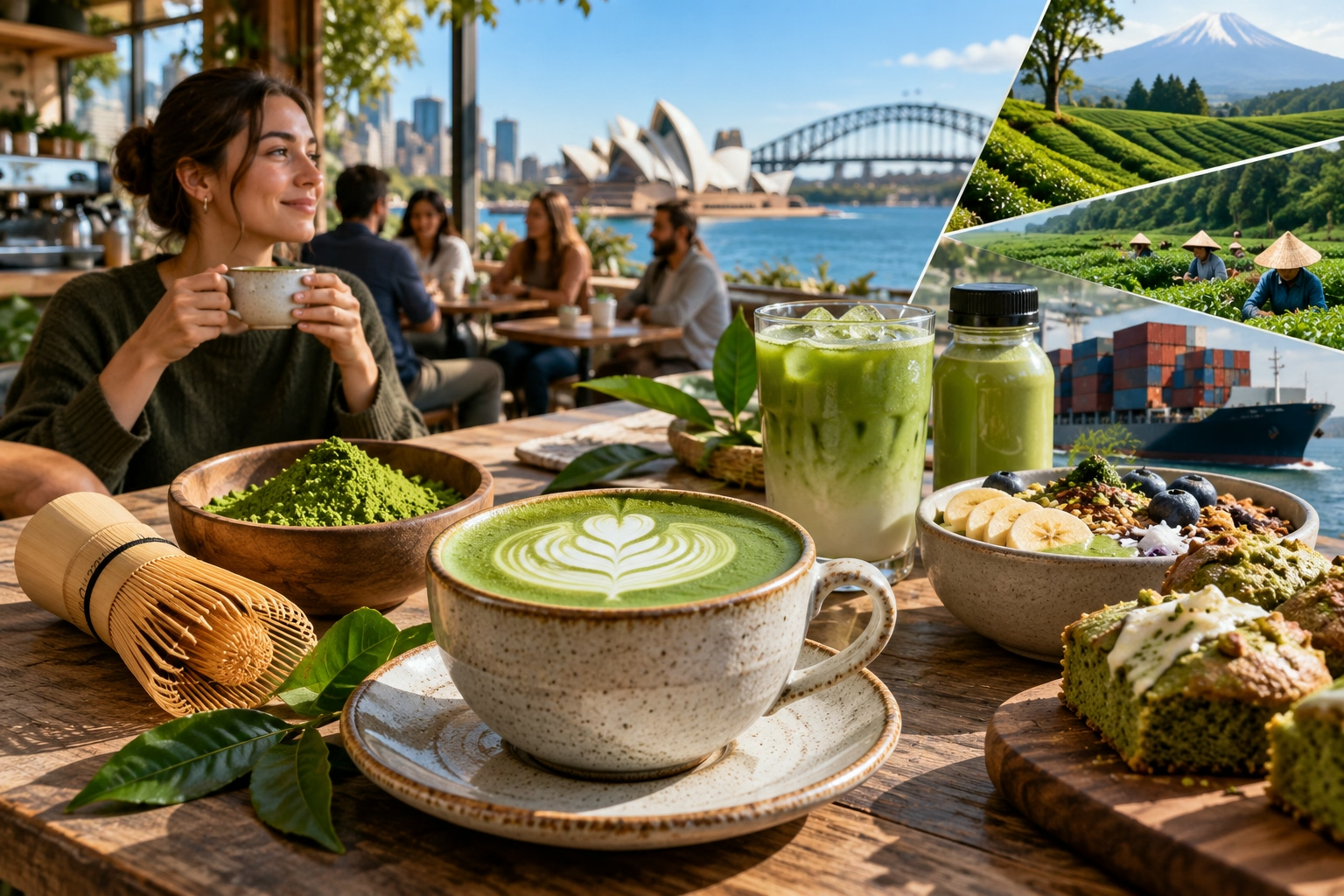
There is a quieter, more cultural dimension to matcha’s lifestyle expansion. Purematcha describes matcha as “a daily ritual—a five-minute pause that resets the nervous system”. That framing resonates in a market where wellness is increasingly about nervous-system regulation rather than simple nutrition. Matcha’s L-theanine content—which moderates caffeine absorption and promotes calm, focused alertness—gives the ritual a physiological story that brands can tell without overclaiming. In a country where coffee culture has long been associated with speed and sociability, matcha offers a slower, more introspective alternative. The ritual is the product.
Merchandise and the Aesthetic Layer
The lifestyle creep is also aesthetic. Matcha’s vivid green colour has become a visual shorthand for a certain kind of Australian wellness identity—one that values clean ingredients, Japanese craft, and Instagram-ready presentation. Café merchandise, from ceramic whisks to branded tins, extends the ritual into the home. Matcha Mate’s Collingwood store was originally conceived as a showroom for its retail products, but demand for hand-whisked drinks overwhelmed the retail-first plan. The retail line and the café experience now reinforce each other: customers sample a blend in-store, then buy the tin to recreate the ritual at home. This is how a beverage becomes a lifestyle category—not through advertising, but through repeated, embodied practice.