









Australia’s culinary identity has undergone a major transformation over the past several decades. Once strongly associated with British and European food traditions, Australia has developed into one of the world’s most multicultural dining destinations, largely because of migration from Asia. Chinese, Vietnamese, Thai, Japanese, Korean, Indian, Malaysian, and Indonesian communities have introduced new ingredients, cooking techniques, and dining traditions that have reshaped how Australians experience food.
The Historical Role of Asian Migration in Australia’s Culinary Evolution
Asian influence on Australian cuisine began significantly with Chinese migration during the 19th-century gold rush era. Chinese communities established restaurants and food businesses that introduced Australians to dishes such as dumplings, noodles, and stir-fried meals. Although early migrants faced discrimination, their culinary traditions gradually became an important part of Australia’s urban food landscape.
The migration wave after World War II and especially after the relaxation of immigration policies in the 1970s accelerated this transformation. Large numbers of migrants from Southeast Asia and East Asia settled in major cities including Sydney, Melbourne, Brisbane, and Perth. These communities created vibrant food districts where traditional recipes were preserved while adapting to Australian tastes.
According to the Australian Bureau of Statistics, overseas-born residents represented 31.5% of Australia’s population in the 2021 Census, demonstrating the country’s significant multicultural foundation. The latest demographic information can be accessed through the ABS website: https://www.abs.gov.au/census
From Traditional Restaurants to Mainstream Australian Dining
Asian cuisine is no longer limited to ethnic neighborhoods. Today, Asian flavors appear throughout Australian food culture, from high-end restaurants to supermarkets and home kitchens.
Melbourne’s Chinatown, Sydney’s Haymarket district, and Brisbane’s Sunnybank have become examples of how migration communities influence local economies through food. Restaurants operated by migrant families often serve as cultural bridges, allowing Australians from different backgrounds to experience authentic dishes while learning about Asian traditions.
A clear example can be seen in Vietnamese cuisine. After the arrival of Vietnamese refugees following the Vietnam War, dishes such as pho, banh mi, and fresh rice paper rolls became increasingly popular. What began as community-based food businesses developed into a mainstream culinary trend found across Australian cities.
Modern Asian Food Trends Reflect Cultural Fusion
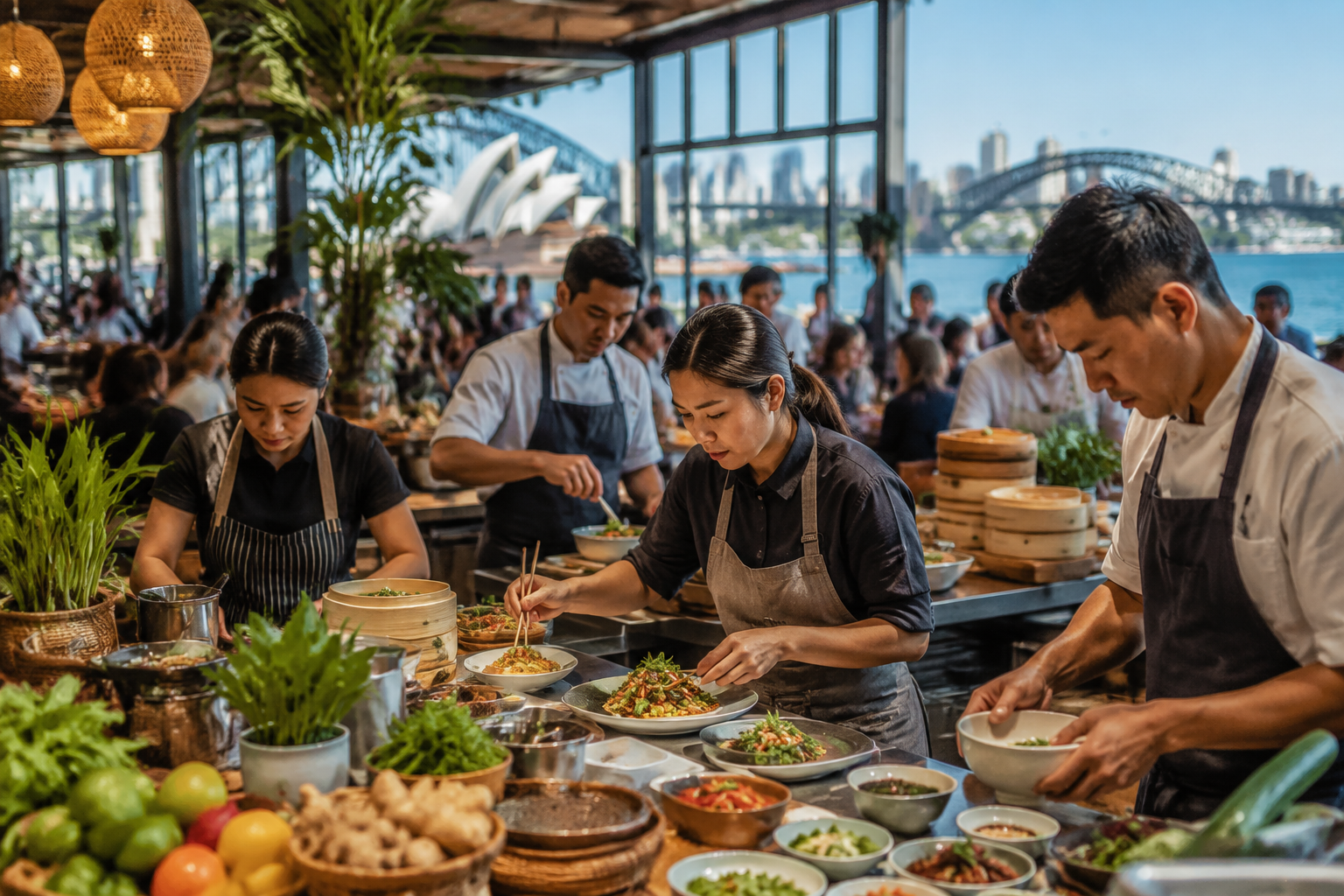
The current Australian food scene demonstrates a growing fusion between Asian heritage and local innovation. Chefs are combining Asian ingredients with Australian produce, creating unique dining experiences that represent modern multicultural Australia.
Examples include Korean barbecue restaurants using Australian beef, Japanese-inspired restaurants featuring local seafood, and Southeast Asian eateries incorporating native Australian ingredients such as finger lime and wattleseed.
This fusion reflects a broader social change: food has become a powerful way for migrant communities to share identity and history. Restaurants are not only commercial spaces but also cultural platforms where stories of migration, family traditions, and adaptation are presented through cuisine.
The Economic and Social Impact of Asian Culinary Communities
Asian food businesses contribute significantly to Australia’s hospitality industry. Migrant entrepreneurs have created thousands of restaurants, grocery stores, and food markets that generate employment and encourage cultural exchange.
The popularity of Asian cuisine also influences consumer behavior. Australians increasingly seek authentic international flavors, cooking ingredients, and dining experiences. Supermarkets now dedicate larger sections to Asian products, while food delivery platforms have expanded access to diverse cuisines.
The growth of Asian culinary influence shows how migration has expanded Australia’s definition of national cuisine. Rather than replacing existing traditions, Asian food culture has become an essential part of Australia’s evolving identity, creating a dining environment where different histories and communities come together through shared meals.