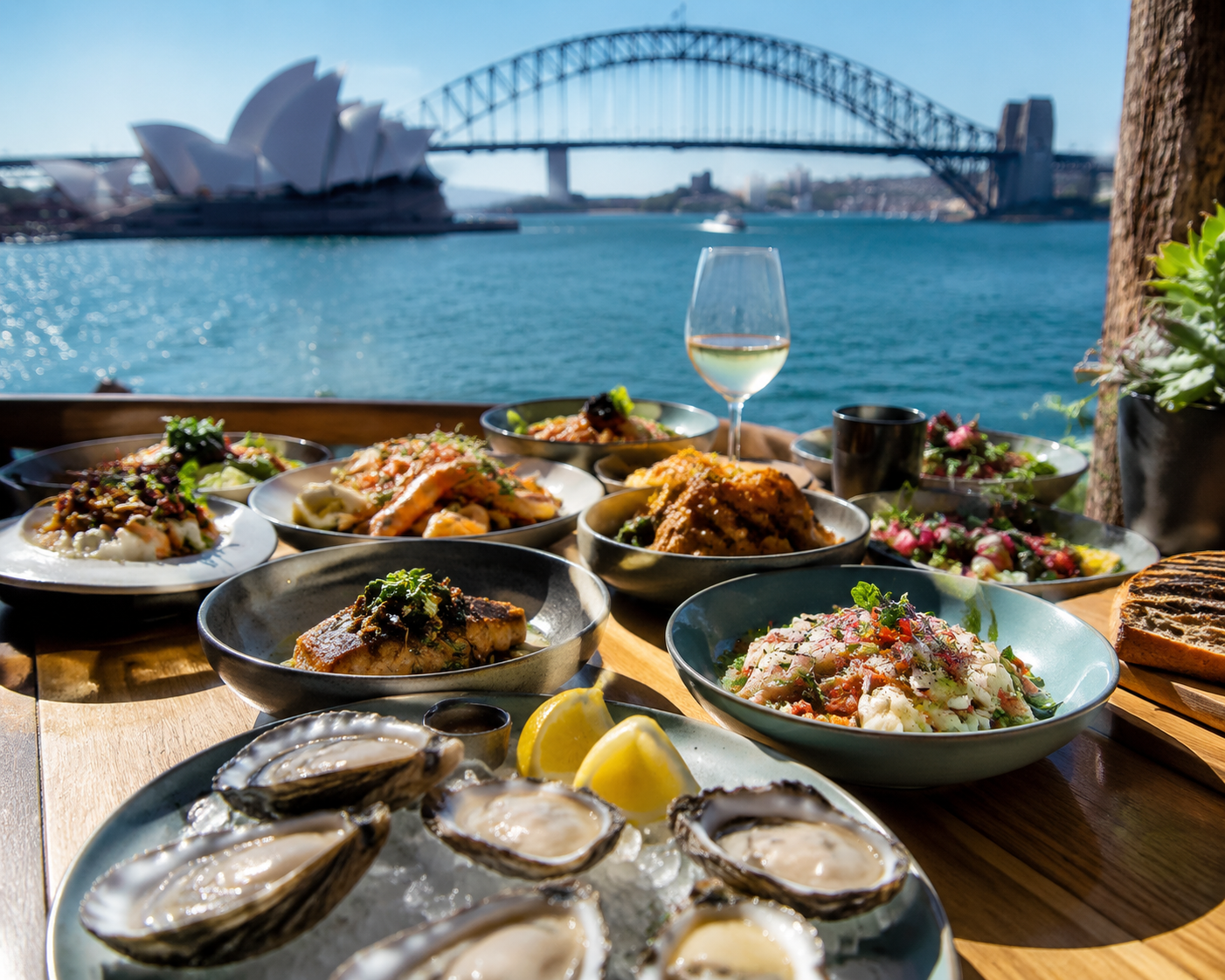
Australia’s food scene cannot be explained by one national dish. It is shaped by Indigenous knowledge, coastal produce, agricultural regions, and generations of migration from Asia, Europe, the Middle East, and the Pacific.
For travellers, this diversity creates a culinary itinerary that can include native pepperberry at lunch, handmade Italian pasta in the evening, and Cantonese-style seafood the following day. A useful starting point is Tourism Australia’s official food and drink guide, which introduces regional produce, wine destinations, culinary events, and dining experiences across the country.
Understanding Modern Australian Cuisine
Modern Australian cooking is less a fixed recipe than a way of using local ingredients. Chefs often combine European techniques with produce such as barramundi, finger lime, wattleseed, lemon myrtle, macadamia, kangaroo, and saltbush.
Visitors should not assume that every restaurant serving native ingredients represents Indigenous cuisine. Authentic experiences are strongest when Indigenous producers, cooks, guides, or communities are directly involved. Food tours led by First Nations operators can provide valuable context about seasonal harvesting, cultural responsibility, and the traditional uses of native plants.
Sydney: Seafood, Asian Dining, and Harbour Views
Sydney is a logical starting point for a food-focused journey. Its harbour location supports a strong seafood culture, while suburbs including Haymarket, Cabramatta, Harris Park, and Marrickville reveal the city’s multicultural identity.
For a special meal, Bennelong offers contemporary Australian dining inside the Sydney Opera House. Saint Peter is widely associated with sustainable, whole-fish cooking, while Lankan Filling Station presents Sri Lankan flavours through hoppers, curries, sambols, and spiced seafood.
Travellers seeking affordable options should explore Chinatown food courts, Vietnamese restaurants in Cabramatta, and Indian dining in Harris Park.
Melbourne: Australia’s Most Layered Dining City
Melbourne’s culinary strength comes from neighbourhood diversity. Italian food remains central around Carlton, while Richmond is known for Vietnamese dining and Box Hill for Chinese cuisine.
Attica is recognised for creative tasting menus inspired by Australian ingredients and cultural references. Maha focuses on Middle Eastern flavours, and Supernormal serves a contemporary interpretation of East Asian food. Pasta lovers can also research Tipo 00, a compact restaurant known for handmade pasta.
Melbourne’s café culture deserves equal attention. Rather than ordering only a flat white, visitors can explore seasonal brunch menus, small-batch bakeries, and locally roasted coffee.
Adelaide, Perth, and Hobart
Adelaide provides direct access to South Australian wine and produce. Restaurant Botanic offers an ingredient-led tasting experience, while Africola is known for energetic African-influenced cooking.
In Perth, Wildflower presents seasonal menus influenced by Western Australia’s Indigenous six-season calendar. Lulu La Delizia is a strong option for regional Italian cooking.
Hobart combines seafood, cool-climate produce, and intimate restaurants. Fico and Aloft are useful names to research, while the Salamanca Market introduces visitors to Tasmanian cheese, bread, preserves, and seasonal produce.
Practical Advice for a Culinary Trip
Book leading restaurants several weeks ahead, especially for Friday and Saturday evenings. Confirm dietary requirements before arriving, because tasting menus may have limited substitutions.
Balance expensive reservations with markets, bakeries, neighbourhood restaurants, and regional producers. This approach offers a more accurate picture of Australian food culture than fine dining alone.