Differentiation in a Homogenised Market
Australia‘s independent restaurant sector is under extraordinary pressure. The ABC reported in October 2026 that wage rises, capped migration, inflation, and unfavourable tax settings are “causing carnage” among small operators, with one Canberra restaurateur closing his venue despite having no trouble filling seats. In this environment, differentiation is not a marketing luxury—it is survival.
Wood-fired cooking offers something that a menu consultant cannot replicate: visible, sensory distinctiveness. As the Australian Restaurant & Cafe Association’s policy document notes, the industry faces rising costs and labour shortages that make efficiency paramount. A wood-fired grill addresses both problems simultaneously. It requires fewer pieces of equipment, creates a central visual anchor that reduces the need for expensive interior decoration, and generates a dining experience that customers cannot get from delivery apps—a crucial consideration as dine-in revenue fell from 31 percent in 2024 to just 20 percent in 2025.
The Barangaroo Test Case
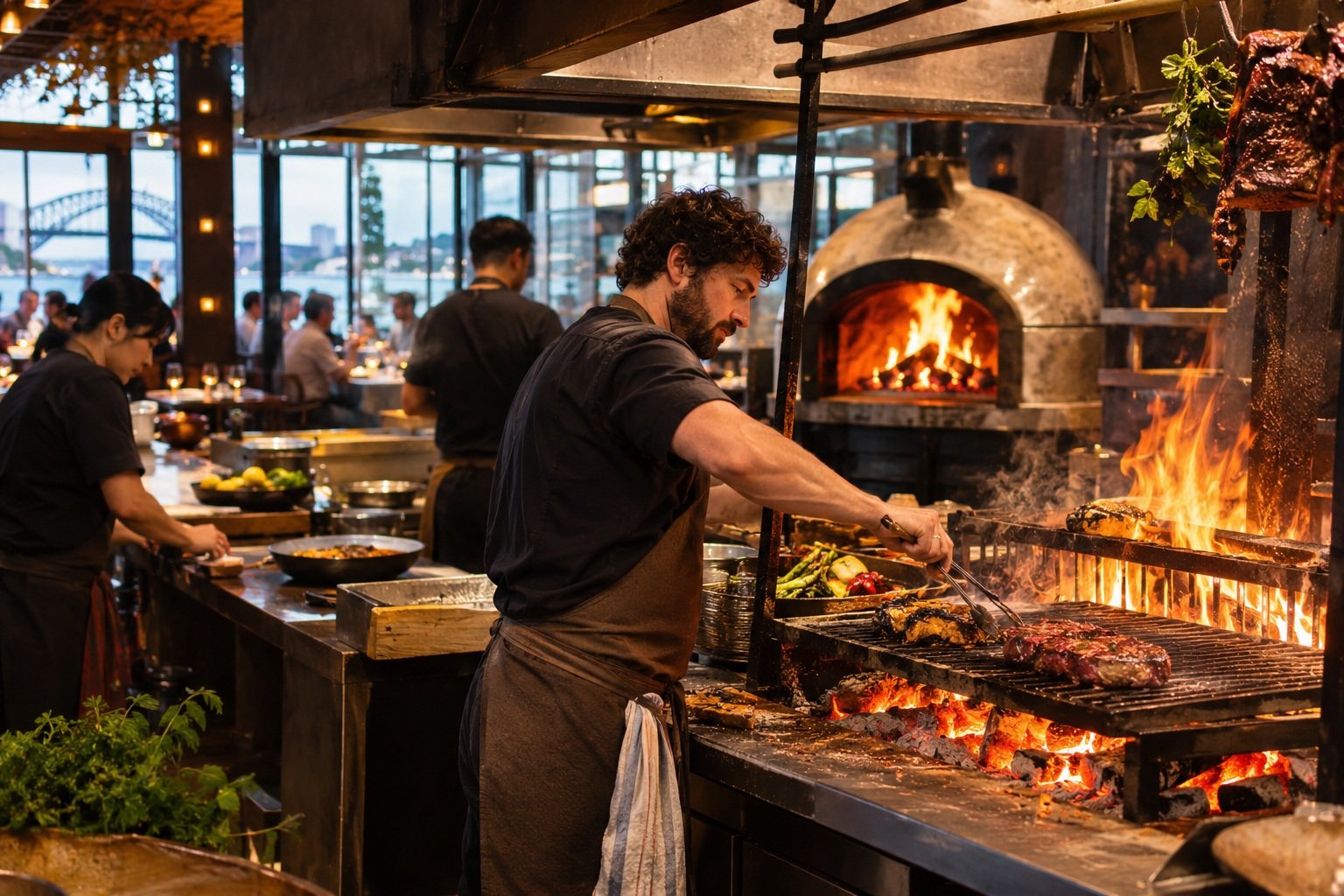
Pony Dining‘s decision to open a 200-seat wood-fired restaurant in Barangaroo in November 2026 is the clearest signal that operators see fire as a business asset, not a cost centre. Executive Chef Neil Nolan told Hospitality Magazine that the venue would feature “an expansive open-plan kitchen in full view,” continuing the group’s two-decade commitment to “transparency and theatre through cooking”. The new site also includes in-house butchery and dry-ageing, live seafood tanks, and a dedicated wok section—all integrated around a wood-fire programme.
The scale matters. A 200-seat restaurant cannot survive on novelty alone. Pony Dining is betting that the combination of fire, visible craft, and a waterfront location justifies premium pricing in a market where consumers are actively cutting back. The group‘s 20-year track record at The Rocks suggests the bet is grounded in more than optimism.
The Labour Paradox
One counterintuitive argument for wood-fired cooking is that it can help with staffing. Working with fire requires skill, attention, and physical engagement—qualities that appeal to chefs who are tired of the monitor-and-timer rhythm of sous-vide. As The Staff Canteen reported, chefs are “talking about the energy of working with flame again,” with speed and texture mattering more than precision programming. In a labour market where qualified staff are scarce and large groups act as “vacuum cleaners” for talent, a kitchen that offers craft and visible skill can be a retention tool.
At Magma in Western Sydney, Dany Karam has built a collaborative series that brings guest chefs into his open-flame kitchen for one-off menus. The project serves dual purposes: it markets the restaurant to locals who might otherwise dine in the city, and it gives chefs a reason to engage with fire in a way their home kitchens may not allow. In a punishing market, fire is proving to be both a creative outlet and a commercial strategy.