
A $27 Billion Industry in Transition
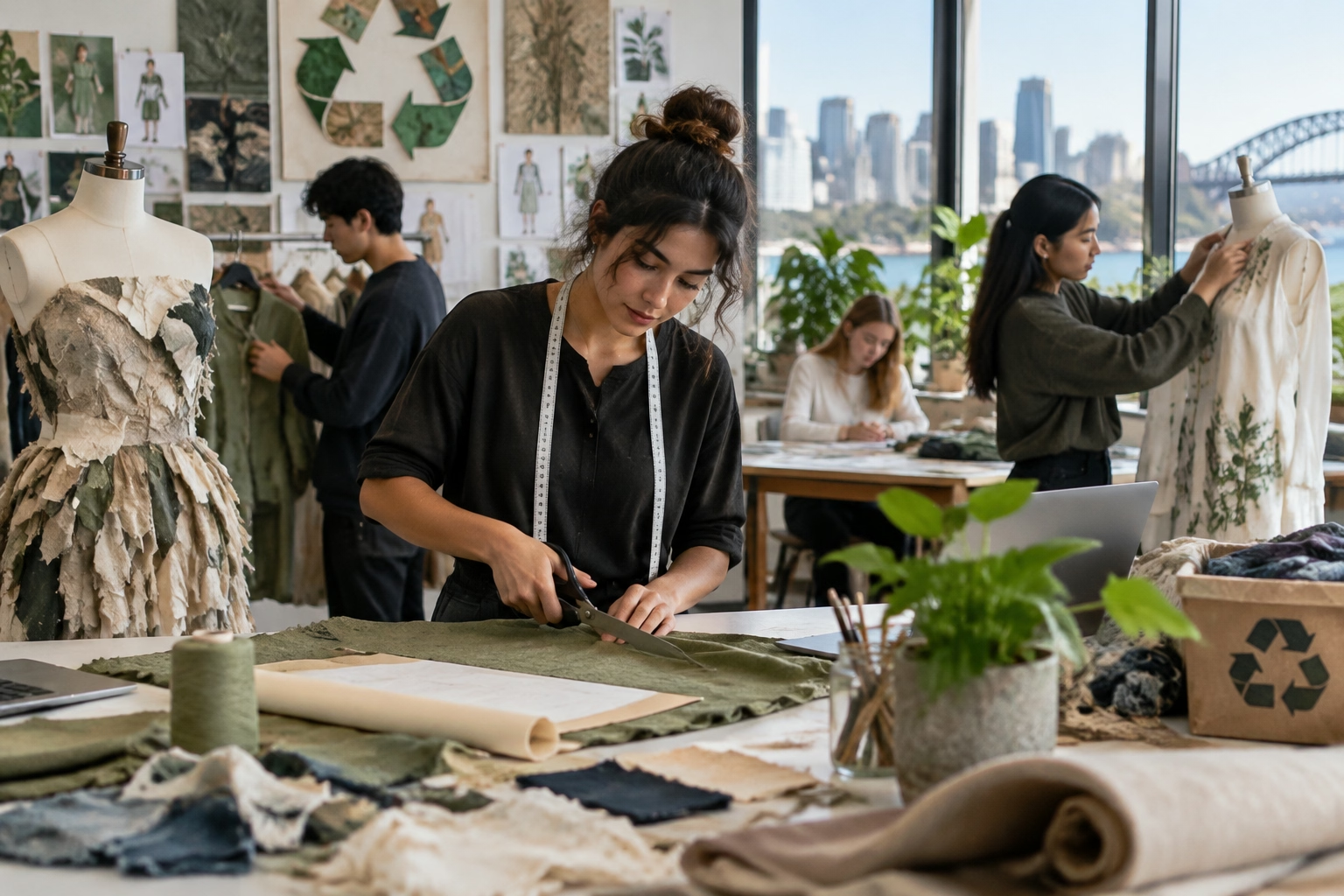
Australia’s fashion industry is worth approximately $27 billion, but it is not the same industry that absorbed graduates a decade ago. Customer demands are shifting faster than ever, competition is intensifying, and technology is fundamentally reshaping how clothing is produced and sold. For fashion graduates, this disruption is both a challenge and an opportunity.
The question facing every aspiring designer is straightforward: where are the jobs, and what skills do you need to secure them? The answers, according to industry data and employer feedback, reveal a sector that is becoming more specialised, more digital, and more focused on sustainability than at any point in its history.
Understanding the Employment Landscape
According to employment data from June 2026, approximately 95 fashion designer jobs were advertised online, while employers posted about 30 clothing trades positions — a figure that was up 7.1 per cent on the previous year. The Australian fashion design workforce currently employs approximately 14,100 people, with workforce growth described as steady at +0.1 per cent year-on-year.
These headline numbers, however, mask a more nuanced picture. While traditional fashion designer roles remain competitive, demand is growing rapidly in adjacent specialisations: sustainability consulting, digital product development, textile innovation, and fashion technology management.
The Rise of Specialised Roles
Australian fashion schools have responded to this specialisation by offering distinct pathways within their programs. RMIT’s Associate Degree in Fashion, for example, allows students to choose between Design and Technology or Business and Retail streams after a common first semester, ensuring that graduates enter the industry with a clear professional identity.
The Design and Technology stream develops advanced skills in patternmaking, product design, fashion range development, and production management. The Business and Retail stream focuses on product ranging, merchandise management, digital strategies, fashion marketing, and logistics. This bifurcation reflects the reality that the fashion industry needs both creative and commercial talent — and that the most successful graduates are those who understand both.
Salary Expectations and Career Progression
For graduates entering the industry, salary expectations vary significantly by role and specialisation. According to Collarts, which tracks graduate outcomes across its creative programs, fashion designers can expect average industry salaries in the range of $65,000 to $85,000, while textile designers earn between $79,000 and $85,000.
These figures represent starting to mid-level positions. Graduates who progress into senior design roles, creative director positions, or establish their own labels can command significantly higher earnings. The broader Australian fashion industry reports a typical salary of around $88,000, with a five-year job growth projection of 28.4 per cent.
The Employer Perspective: What Brands Want
Conversations with industry leaders reveal a consistent set of priorities. Rachel Van Brussel, founder of Van Brussel and a finalist in the 2026 National Designer Award, emphasises that customers are becoming increasingly engaged with how their clothes are made, driving a shift back toward onshore manufacturing.
“We are already seeing a clear movement away from fast, disposable fashion,” Van Brussel notes. “Consumers are becoming more intentional with their purchasing decisions — seeking well-made garments that feel purposeful, remain relevant, and maintain their integrity for years to come”.
Justin Tong, another award finalist, adds that the future belongs to brands that can combine story, structure, and strategy. “To succeed as a designer brand, you need more than creativity. You need product integrity, a clear customer, and an agile supply chain that allows you to grow without overproducing”.
The Skills That Matter Most in 2026
The common thread across employer feedback is that technical design skills alone are insufficient. The most employable graduates are those who can demonstrate competence in three areas: creative design and construction, commercial acumen, and sustainability literacy.
Australian fashion schools are increasingly structured around this tripartite model. UTS’s Bachelor of Design in Fashion and Textiles, for example, includes subjects in Fashion Cultures, Fashion Intersections, and Fashion and Textiles Professional Practice alongside technical patternmaking and construction units. This ensures that graduates understand not just how to make garments, but how the fashion system works and where they fit within it.
Building a Sustainable Career
For graduates navigating this evolving landscape, the most important insight is that a fashion career is no longer a linear path. It is a portfolio of skills, experiences, and relationships that can be deployed across multiple roles and contexts. The graduates who thrive will be those who remain curious, adaptable, and committed to continuous learning long after they leave the classroom.