
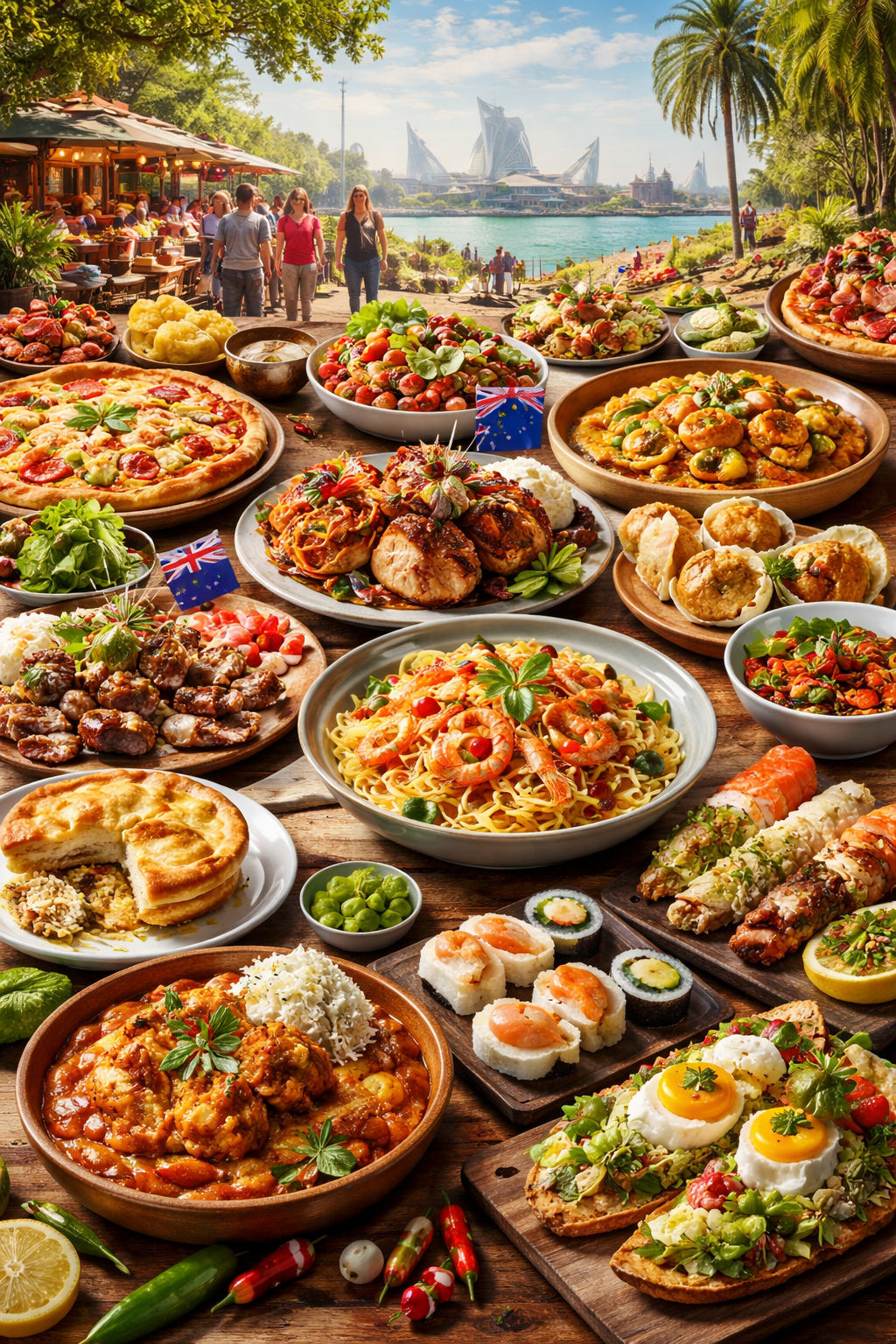
The culinary evolution of Australia is a testament to the country’s history of British colonization, waves of immigration, and the blending of diverse cultural influences. From its early days of British-inspired food to its modern, fusion-driven approach to cooking, Australian cuisine has transformed into a melting pot of flavors that now encompasses global influences from Europe, Asia, the Middle East, and beyond.
Initially, British settlers who arrived in Australia in the 18th century brought with them the traditional foods of the British Isles. Meat pies, stews, roasted meats, and puddings were common fare, reflecting the settlers’ desire for familiar comforts in a foreign land. These British culinary traditions were adapted to suit the ingredients available in Australia, but they remained largely unchanged for much of the early colonial period.
However, in the decades following World War II, the food landscape began to shift as immigrants from Europe and other parts of the world arrived in Australia. Italian and Greek immigrants introduced new culinary traditions, including pasta, pizza, and fresh seafood dishes. These European influences marked a significant departure from the heavy, meat-centric British dishes and began to introduce lighter, more Mediterranean-inspired flavors into Australian kitchens.
The 1970s and 1980s brought another wave of culinary change as Australian cuisine began to embrace the flavors of Asia and the Middle East. Chinese, Vietnamese, and Thai cuisines became increasingly popular, introducing new spices, herbs, and cooking techniques to Australian dining. Asian-inspired dishes like stir-fries, dumplings, and curries became common in Australian households and restaurants, further diversifying the country’s food culture.
In recent decades, Australian chefs have become known for their creative approach to blending traditional and modern ingredients. Indigenous Australian foods have found their place on menus, with native plants and animals like kangaroo, emu, and wattleseed now appearing in contemporary Australian cuisine. This blending of indigenous ingredients with global flavors has led to the creation of truly unique dishes that showcase Australia’s rich culinary heritage and modern innovation.
Australia’s culinary evolution is a reflection of the country’s diverse cultural landscape. What began as a British-influenced food culture has grown into a vibrant, multicultural food scene that embraces global flavors while honoring local traditions. As Australian chefs continue to experiment and push boundaries, the country’s food culture remains an exciting and dynamic force in the global culinary world.