

Australia’s designers have marked key milestones that shifted perceptions of the country’s creative capacity. Collette Dinnigan’s Paris runway shows signaled early international legitimacy, elevating delicate lace and refined slip dresses to a global audience. That step opened doors for others to move confidently between hemispheres and fashion capitals.
Carla Zampatti’s career cemented the idea that Australian labels could define corporate elegance. Her tailored jackets, sleek jumpsuits, and event-ready pieces aligned with the needs of women leading in public life. Zampatti also highlighted fashion’s civic role through patronage and mentorship, broadening the industry’s cultural footprint.
Zimmermann’s expansion refined resort as luxury category. The brand demonstrated that airy dresses, swim-adjacent separates, and intricate detailing could command high-end positioning. Their editorial presence—consistent visual storytelling, polished campaigns—helped normalize Australian labels in top-tier department stores and e-commerce platforms.
Dion Lee’s presence at international fashion weeks brought an experimental rigor. His pattern engineering, modular garments, and corsetry-informed suiting attracted attention from editors and celebrities, placing Australian technical design in the same conversation as avant-garde European houses. Alex Perry’s red-carpet consistency, meanwhile, cemented Australia as a destination for event dressing with precision tailoring and camera-savvy silhouettes.
Toni Maticevski’s sculptural gowns and Romance Was Born’s artist collaborations highlighted range: from architectural couture to narrative-rich spectacle. These contrasts reveal a scene that is neither monolithic nor niche—it thrives on pluralism. Kym Ellery’s directional minimalism added an intellectual thread, proving Australian design can do quiet innovation as powerfully as statement pieces.
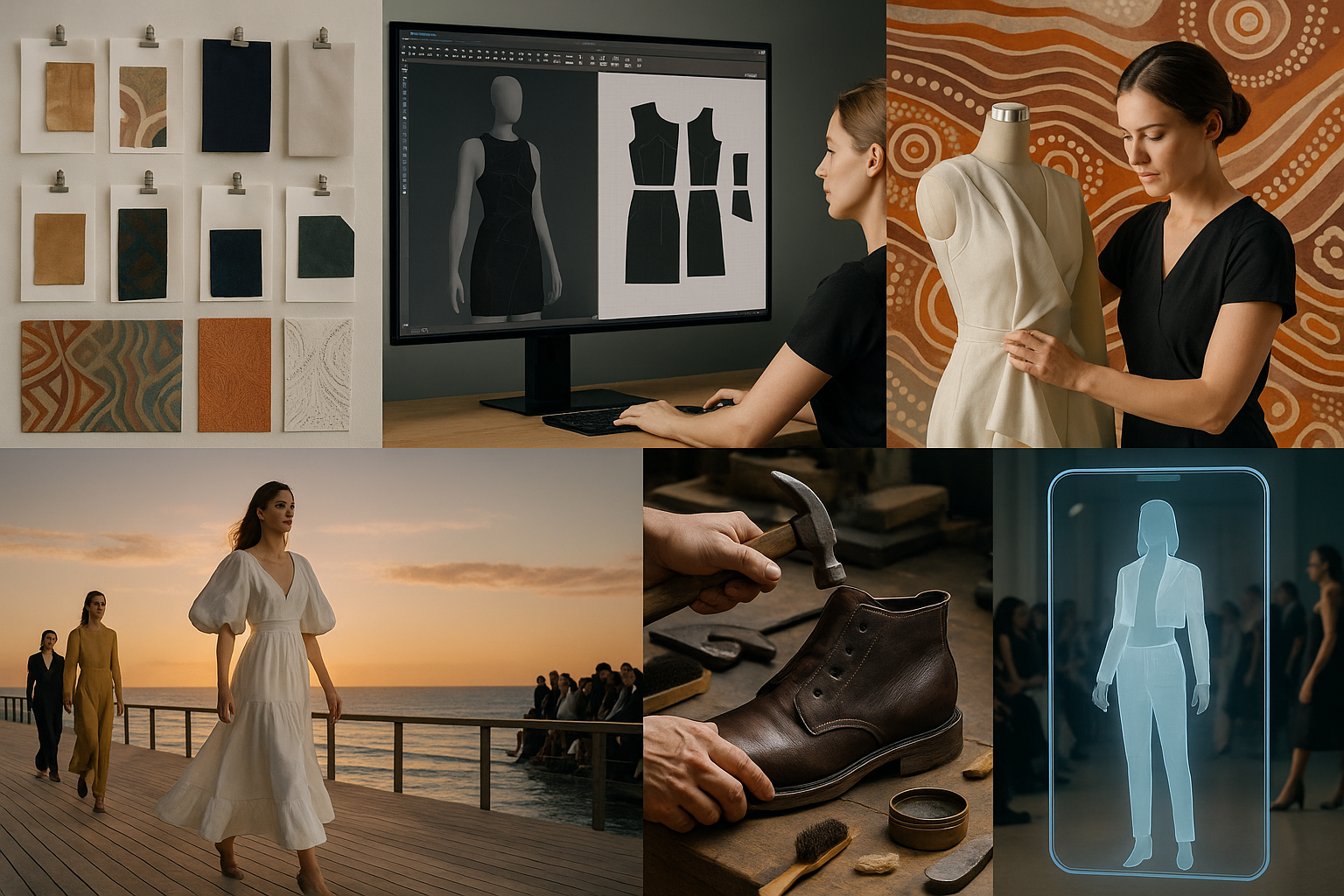
Footwear and heritage brands add depth. R.M. Williams exemplifies durable luxury with repairable boots built for decades of use. In accessories, a focus on clean lines and functionality mirrors national taste: practical pieces elevated through material quality.
Importantly, Indigenous-led fashion reframes the industry’s relationship to culture. Designers and collectives advance protocols for licensing artworks, ensuring artists and communities benefit from commercial success. Runway appearances showcase not just print and palette, but a model of ethical collaboration that international audiences increasingly value.
Sustainability milestones continue to accrue. Bassike’s on-shore production, KitX’s certified materials, and small-batch strategies across labels respond to demands for transparency. Digital sampling and 3D fitting tools are being adopted to reduce waste and speed iteration without overproducing. These changes position Australia as a test bed for agile, responsible fashion.
Australian fashion’s global impact rests on a set of deliverables: runway credibility, retail performance, red-carpet visibility, and ethical leadership. As designers move fluidly between these arenas, they offer a compelling answer to what modern luxury can be—beautiful, functional, culturally respectful, and future-minded. The milestone is no longer just presence on a Paris or New York schedule; it’s the capacity to evolve the industry’s priorities while producing clothes that people delight in wearing.