

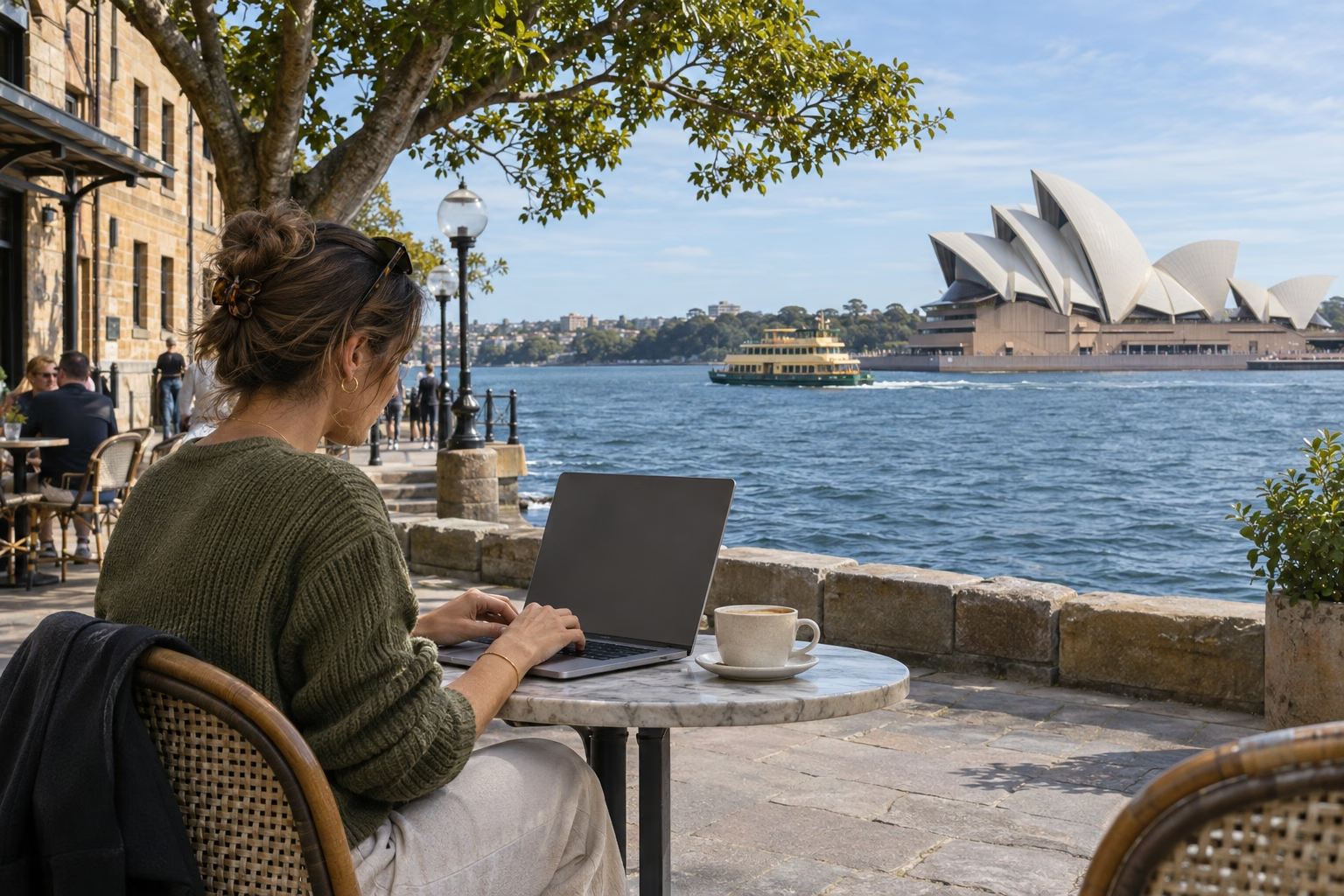
The dominant narrative in Australia’s digital nomad conversation centres on Sydney, Melbourne, and Brisbane—the three largest cities and the ones most frequently featured in remote work rankings. Yet the Reckon Work and Wander Index, which placed Adelaide seventh among Australian destinations, obscures a more interesting story for budget-conscious nomads: the smaller capitals offer a materially different value proposition that the headline rankings do not capture .
Beyond the Top Three
Adelaide’s position in the Reckon index reflects a city that performs solidly without excelling in any single category. But for digital nomads whose priority is maximising disposable income while maintaining urban amenity, the South Australian capital presents an argument that cost-per-month calculations make difficult to ignore. The city’s festival calendar, proximity to the Barossa Valley wine region, and central market culture provide a quality of life that residents consistently defend against the gravitational pull of Melbourne and Sydney .
The broader cost picture reinforces this. A 2026 cost-of-living analysis found that housing averages AU$1,382 per month nationally, with one-bedroom apartments in Sydney or Melbourne outer suburbs running AU$1,500 to AU$1,800 monthly . Smaller capitals typically sit below these figures, though the gap varies by neighbourhood and housing type.
The Internet Equaliser
One factor that has historically disadvantaged smaller cities—internet quality—has largely evaporated. The Australian Competition and Consumer Commission’s 2026 broadband report found that fixed-line NBN connections across the country deliver 99.4 percent of plan speeds during peak periods, with 88.2 percent of download tests achieving at least 90 percent of plan speed . This uniformity means a remote worker in Adelaide can expect functionally equivalent connectivity to a counterpart in Sydney, provided both have fixed-line connections.
The Trade-Offs That Matter
What smaller capitals lack is scale. Adelaide’s co-working scene is smaller, its networking events less frequent, and its airport connections more limited than the eastern seaboard giants. For nomads whose work depends on serendipitous encounters or client meetings that require physical presence, these deficits carry real professional costs.
But for the growing cohort of remote workers whose income derives entirely from overseas clients or asynchronous digital products, the calculus shifts. The question becomes not “which city offers the most opportunities” but “which city allows me to keep the most of what I earn while enjoying a comfortable life.” On that metric, the second tier deserves closer scrutiny than the headline rankings suggest.