
A Lunch Campaign Built on Internet Lore
The premise was simple enough to fit in a group chat: take the most stubbornly loyal food characters the internet has produced — the “Por Que No Los Dos?” girl, the Fat Pizza guys, the “Sushi Carol” duo — and put them in a focus group where they are gradually converted to charcoal chicken. El Jannah’s “Who Can Resist?” campaign, created by independent agency Emotive, launched in May 2026 to support the national rollout of the Legendary Lebanese Lunch range: made-to-order charcoal chicken rolls with chips and a drink for A$14, available in-restaurant until 4pm.
The creative choice was not random. El Jannah CMO Adam Issa described lunch as “one of the biggest growth opportunities” in front of the brand, and the campaign was designed to be impossible to ignore in a crowded lunchtime media environment. By casting characters whose entire identity is built around a single food obsession, the brand borrowed the grammar of internet fandom rather than interrupting it. The message was not “try our new lunch” but “even the most devoted food loyalists can be converted” — a claim that flatters the viewer’s own taste while making the product the punchline.
The Value Proposition Behind the Meme
Meme fluency alone does not sell chicken rolls. The A$14 price point does much of the commercial work. It positions El Jannah directly against the mid-tier lunch market — the sushi roll, the salad bowl, the meal deal — while offering something that feels more substantial and more culturally specific than a generic sandwich. The lunch range is also a strategic answer to a structural problem: charcoal chicken shops have historically been dinner-led businesses, leaving expensive real estate and labour underutilised during the day.
The campaign’s distribution matched its creative logic. Developed end-to-end by Emotive, the work rolled out nationally across film, social, earned media and in-store, supported by a system of cutdowns and stills designed to sustain attention over time rather than spike and disappear. That “social-first content ecosystem” approach reflects a broader shift in Australian quick-service marketing: campaigns are no longer built for a single hero film but for a feed that never stops scrolling.
What Gen Z Actually Wants From a Chicken Shop
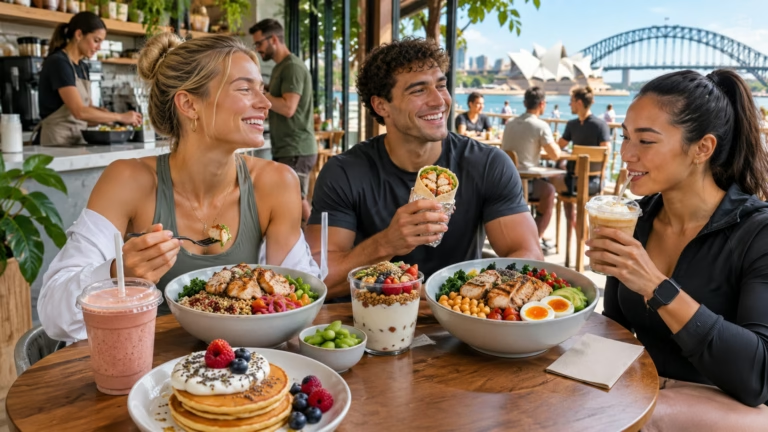
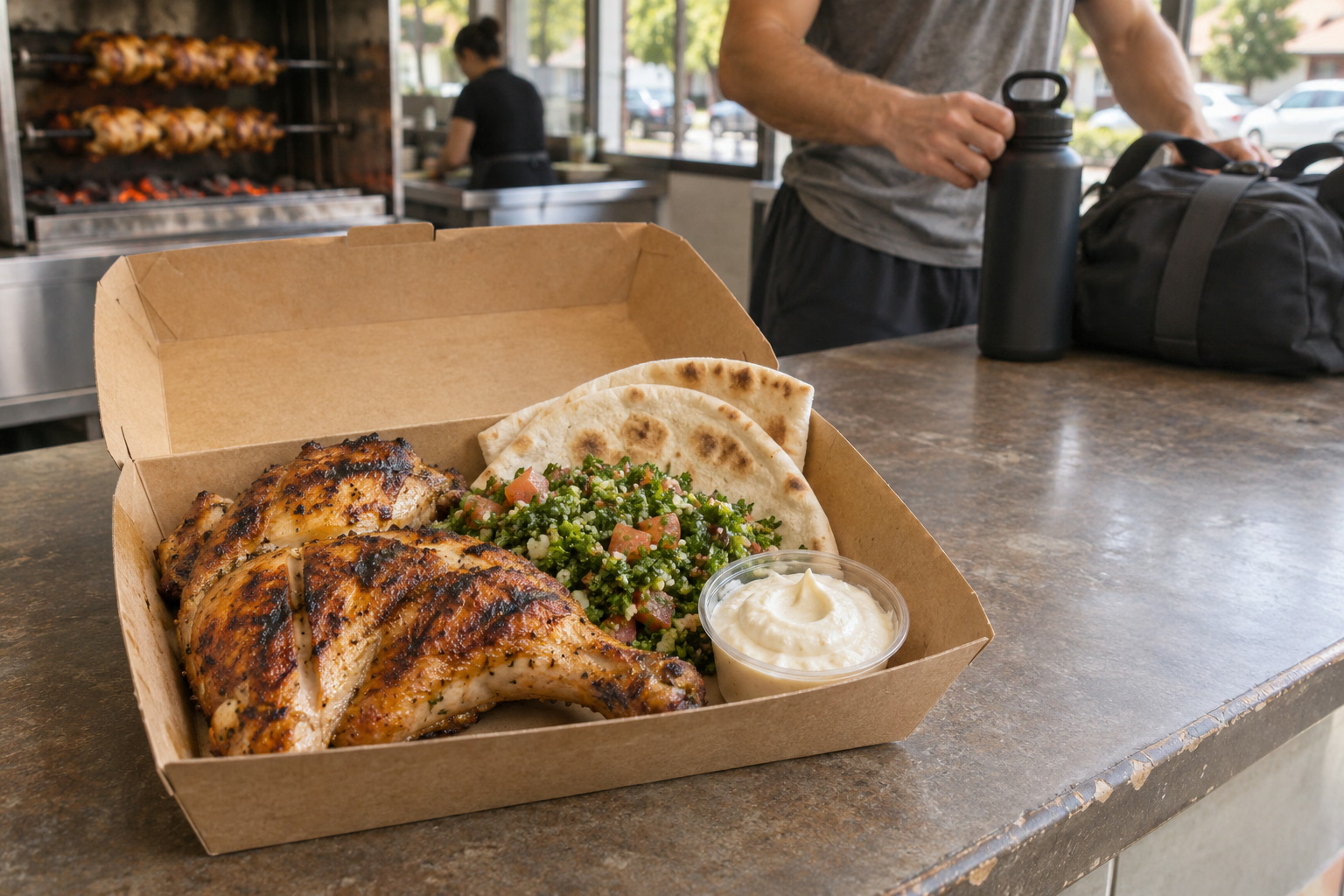
The lunch push also reveals something subtler about the younger customer. Gen Z’s relationship with fast food is not characterised by guilt or nostalgia in the way it was for previous generations. It is characterised by fluency — an ability to move between indulgent and functional eating without moralising either. A charcoal chicken roll can be both a treat and a practical lunch. The same customer might order the Gym Bro pack on a training day and the full chip-and-garlic-sauce experience on a Friday.
El Jannah’s campaign works because it does not try to resolve that contradiction. It leans into appetite, humour and the shared language of the internet, while letting the product’s inherent flexibility do the rest. For a category built on immigrant hospitality and suburban ritual, that is a remarkably contemporary posture — and a sign that charcoal chicken’s revival is being driven as much by cultural translation as by menu innovation.