

Australia’s obesity challenge cannot be solved by telling people to eat less and exercise more. By 2026, the most important question is whether governments, health services, schools, communities and the food sector can turn long-term strategies into practical changes that reach people in everyday life.
Obesity is influenced by far more than individual choice. Food prices, working hours, neighbourhood design, access to health care, marketing and socioeconomic disadvantage all shape the conditions in which people make decisions about health.
Australia’s official National Obesity Strategy 2022–2032 provides a long-term framework for addressing these pressures. The Australian Government’s strategy can be accessed through the Department of Health and Aged Care.
Why Australia Needs a Broader Response to Obesity
National health data have consistently shown that excess weight affects a large share of Australian adults, while childhood overweight and obesity remain significant public health concerns.
The problem is not evenly distributed. People living in disadvantaged communities, regional and remote areas, and locations with limited access to affordable fresh food may face greater obstacles to maintaining a healthy weight.
This makes obesity both a medical issue and an environmental one.
A person may receive advice to buy fresh produce, for example, but that advice has limited value when healthier food is expensive, transport is difficult or convenient ultra-processed products dominate local options.
Prevention Programs Must Reach People Before Disease Develops
Community-Based Support
One of the strongest opportunities for 2026 is to expand programs that operate outside hospitals. Local health services, councils, sports organisations and community groups can provide:
- practical nutrition education;
- accessible physical activity programs;
- culturally appropriate health support;
- family-based weight management; and
- early screening for obesity-related health risks.
The most effective programs are likely to be those designed around local conditions rather than imposed through a single national model.
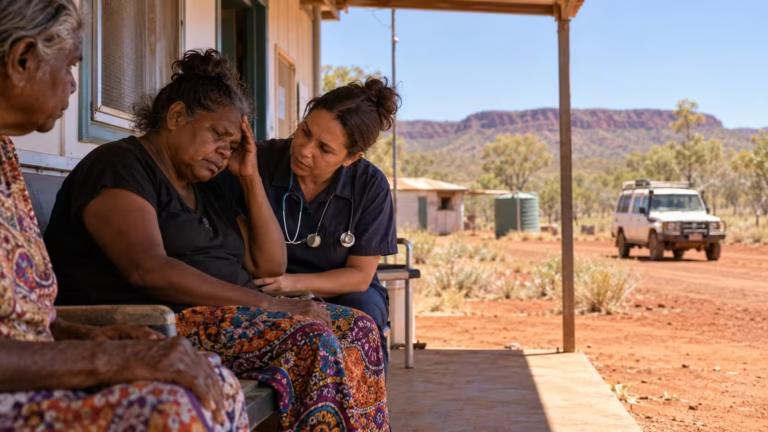
A metropolitan suburb, a remote community and a regional town may require very different solutions.
Primary Care Should Become a Central Part of the Strategy
General practitioners, nurses, dietitians, psychologists and exercise professionals can help identify weight-related risks before complications become severe.
In practice, however, people may encounter cost barriers, long waiting times or fragmented referrals.
A stronger system would connect patients with multidisciplinary care. Someone living with obesity may need nutritional guidance, physical activity support, mental health care and medical treatment at the same time.
The growing use of prescription weight-management medicines has added another dimension to this debate. These treatments may help some patients, but medication alone does not change the food, social and environmental conditions driving obesity across the population.
Food Environments Matter as Much as Personal Motivation
Australia’s future progress will also depend on what happens in supermarkets, schools, workplaces and digital media.
Clearer nutrition information, responsible marketing practices, healthier institutional food and improved access to affordable nutritious products could make healthier decisions easier.
This is particularly important during periods of cost-of-living pressure, when price can become more influential than nutritional value.
What Success Could Look Like Beyond 2026
Australia already has national strategies. The bigger test is implementation.
Progress would mean fewer people developing preventable weight-related diseases, earlier access to support and healthier environments becoming normal rather than exceptional.
The most credible path forward is not a single diet, drug or awareness campaign. It is a coordinated system that combines prevention, accessible health care, supportive communities and policies that make healthy living realistically achievable.