



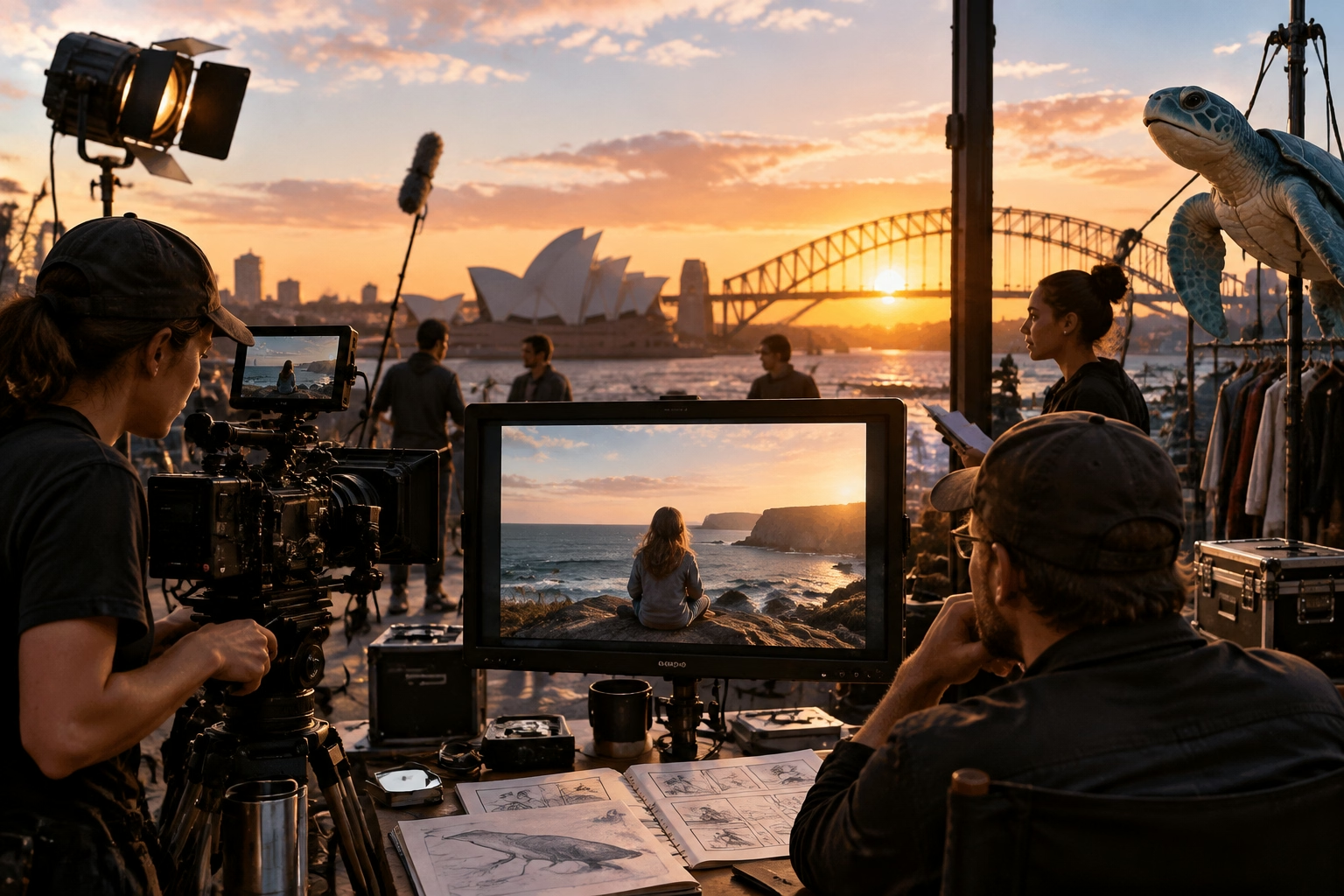
The Unrepeatable Power of Live Performance
In an era of artificial intelligence and digital saturation, Australian performing arts have discovered their most powerful competitive advantage: the irreplaceable authenticity of live, in-person experience. More than 3.4 million Australians attended live theatre, ballet, or opera in the year to March 2026, with overall attendance tracking above pre-COVID levels. Ballet and opera attendance reached 694,000 Australians, representing a 10 percent increase year-on-year and signalling renewed appetite for these historically demanding art forms.
Programming Strategies for a Changing Audience
Australian mainstage companies have responded to this audience resurgence with programming that balances beloved repertoire with contemporary voices. In 2026, Australian mainstages are championing local plays, although adaptations, remounts, and proven voices still far outnumber first-time authors. Playwright Jordan Shea has articulated the new Australian play’s potential to explore territory “uncomfortable, untested and necessary,” serving as a “bridge between different histories, cultures and experiences”.
This tension between innovation and familiarity reflects the economic realities facing producers. Large-scale musicals with proven track records—traditionally reliable audience draws—now face challenging financial conditions, with even successful productions like Beetlejuice and Waitress closing prematurely in the Australian market. The question of “where is the next Hamilton?” looms over commercial producers navigating a landscape where costs have risen faster than ticket revenues.
The Live Music Controversy in Dance and Theatre
A significant industry dispute has emerged around the use of recorded music in ballet productions. The MEAA’s Keep Music Live campaign has called on producers and publicly funded organisations to resist treating live music as an optional extra, warning that growing reliance on recordings risks normalising the replacement of live musicians across the performing arts sector.
This campaign strikes at the heart of what distinguishes live performance from recorded entertainment. When audiences attend a ballet, they expect not only dancers but an orchestra performing in real time, with all the interpretive nuance that live musicianship entails. The dispute raises fundamental questions about the value proposition of live arts and the economic models that sustain them.
Audience Demographics and Regional Disparities
Roy Morgan data reveals that live theatre audiences are concentrated in capital cities, with Sydney and Melbourne attracting a combined audience of 1.52 million people—approximately half of all theatre-goers nationally. These audiences are 38 percent more likely than average Australians to belong to the top socio-economic quintile and hold 64 percent more in savings and investments, reflecting the persistent class dynamics of cultural participation.
Ballet and opera attendance is even more heavily concentrated, with capital cities accounting for more than 78 percent of all attendees. While participation increased by 11 percent year-on-year driven largely by growth in Brisbane and Perth, regional audiences continue to face limited access to touring productions and professional performances.
For performers and creative teams, the challenge lies not only in producing excellent work but in ensuring that work reaches diverse audiences across the continent. The performing arts’ future vitality depends on broadening both the geography and demographics of participation, ensuring that the transformative power of live performance remains accessible to all Australians.