

Beyond a Single Story
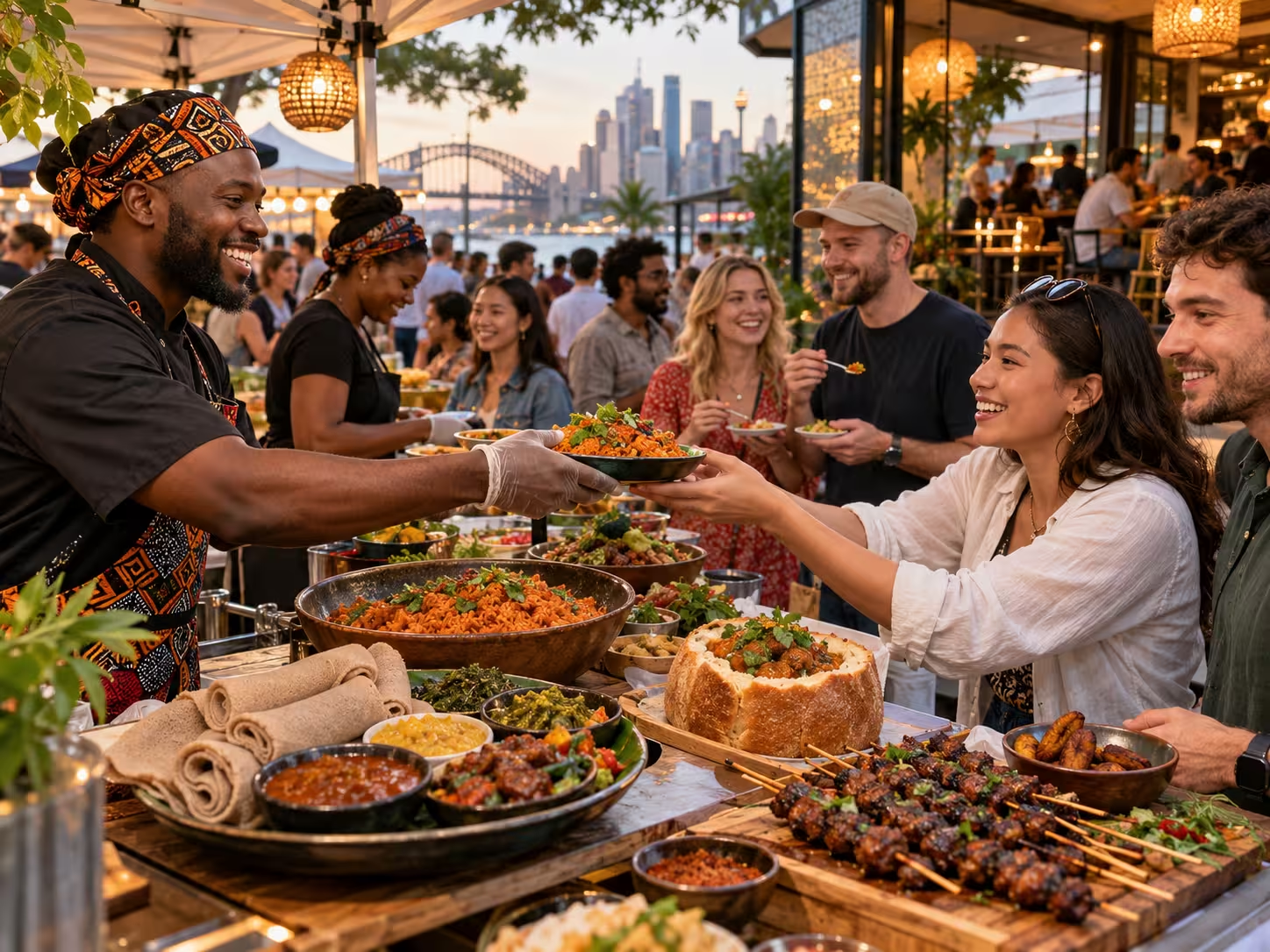
African cuisine is not one cuisine. It is thousands of dishes, spices, and traditions across more than 50 countries. In Australia, this diversity is finally being recognized. Diners can now find Nigerian jollof rice, Ethiopian injera, Moroccan tagine, South African braai, and Somali sambusa in the same city. This regional variety is a key driver of the boom. It gives food lovers a reason to return, explore, and share. It also creates opportunities for chefs to specialize. A restaurant can focus on West African grilled meats, while another highlights East African stews and flatbreads. The result is a richer, more nuanced food landscape. Tourism Australia has noted that food and wine experiences are a major draw for domestic and international visitors, and regional African cuisine adds a new layer to that offering. Tourism Australia
West African Heat and Hospitality
West African cuisine is perhaps the most visible in Australia. Nigerian and Ghanaian restaurants serve jollof rice, egusi soup, pounded yam, and suya. These dishes are bold, spicy, and communal. They are designed to be shared. West African chefs often emphasize hospitality, encouraging diners to eat with their hands and try multiple dishes. The cuisine’s rise has been fueled by social media, where jollof rice competitions and suya grilling videos go viral. In cities like Sydney and Melbourne, West African pop-ups have graduated into permanent restaurants with loyal followings.
East African Stews and Shared Plates
East African cuisine, particularly Ethiopian and Eritrean, has found a strong niche. Injera, a sour fermented flatbread, serves as both plate and utensil. Diners scoop up lentils, chickpeas, collard greens, and spiced meats. This shared style of eating appeals to Australian diners who enjoy tapas and yum cha. Ethiopian restaurants often feature coffee ceremonies, adding a cultural performance element. Somali and Sudanese restaurants are also emerging, offering sambusa, ful medames, and grilled meats. These venues tend to be family-run, with recipes passed down through generations.
North African Fragrance and Technique
North African cuisine—Moroccan, Tunisian, Algerian—brings tagine, couscous, harissa, and preserved lemons. It has been present in Australia for decades, but it is now being reimagined by younger chefs. They are using traditional clay pots, slow-cooking methods, and aromatic spice blends. Some pair North African flavors with Australian seafood and native herbs. This cross-cultural experimentation is attracting fine dining audiences. North African restaurants often have a strong wine and cocktail program, making them suitable for date nights and celebrations.
Southern African Braai and Comfort
Southern African cuisine, especially South African, centers on braai—barbecue—and comfort food. Bunny chow, boerewors, chakalaka, and melktert are appearing on menus. The braai culture resonates with Australians, who love outdoor grilling. South African restaurants and food trucks often combine rugby screenings with food, creating a community atmosphere. Zimbabwean and Zambian eateries are also growing, offering sadza, nyama, and village chicken. These cuisines are less known but are gaining traction through word of mouth and food festivals.
The Power of Regional Identity
Regional identity helps African restaurants stand out. Instead of a generic “African” menu, chefs can tell a specific story. This specificity appeals to Google Discover and search algorithms, which reward niche, authoritative content. Diners searching for “Ethiopian food near me” or “Nigerian restaurant Sydney” find exactly what they want. It also helps diaspora communities find a taste of home. As more regional restaurants open, competition will increase. The winners will be those that maintain quality, authenticity, and strong community ties.