


A Nationwide Screening Experiment That Worked
Australia’s first nationwide genomic screening pilot, DNA Screen, delivered results in January 2026 that fundamentally challenge assumptions about population-scale genetic testing. Published in Nature Health, the study recruited 30,017 registrants, invited 18,573, and achieved 10,263 completed genomic screenings—a 55% conversion rate that far exceeds most international pilots.
The pilot targeted healthy adults aged 18–40, offering free testing for variants in ten high-impact genes linked to hereditary breast and ovarian cancer (BRCA1, BRCA2), Lynch syndrome (MLH1, MSH2, MSH6, PMS2), and familial hypercholesterolaemia (LDLR, APOB, PCSK9, LDLRAP1). Cost-effectiveness models suggest that for every million people screened, 2,800 cancers and 4,000 heart attacks could be prevented over a lifetime.
RNA Testing: The Next Diagnostic Frontier
For patients with rare diseases who remain undiagnosed after DNA sequencing, Australia is pioneering RNA-based diagnostics. The RNA4RD project builds on five years of clinical pilots to integrate RNA testing—a proven new genomic diagnostic modality—into routine care. Unlike DNA sequencing, which identifies variants, RNA testing reveals whether those variants actually disrupt gene expression, resolving variants of uncertain significance that plague rare disease diagnosis.
In September 2026, researchers in Sydney announced a single DNA test for inherited muscle disease that replaces a patchwork of older tests leaving many patients undiagnosed. Published in Nature Communications, the long-read sequencing approach captures both genetic and epigenetic information, identifying causes that short-read sequencing misses.
Mitochondrial Disease and the Mainstreaming Challenge
A post-implementation evaluation of genome sequencing for mitochondrial disease in Australia reported a diagnostic yield of 20%, with 56% of diagnoses occurring in known mitochondrial disease genes. Yet access and funding limitations persist, with genomic testing uptake in public healthcare falling short of policy aims despite reimbursement support.
The HIDDEN Flagship for chronic kidney disease exemplifies the research-to-clinic pipeline, using whole genome investigation to identify undetected nephropathies across national enrolment sites. Similarly, KidGen projects are actively recruiting participants for genomic sequencing, with the Genomic Health Futures Mission funding multiple rare disease cohorts.
The Equity Dimension of Rare Disease Genomics
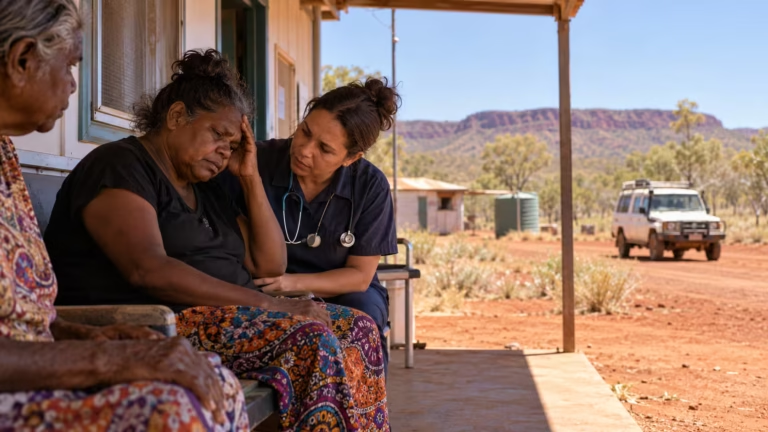
The Precision Health Research Program’s mandate to recruit 150,000 Australians explicitly prioritises underrepresented groups, including Aboriginal and Torres Strait Islander peoples. For rare disease genomics, this equity focus is particularly consequential: diagnostic odysseys disproportionately burden families in rural and remote communities, where access to clinical geneticists and genomic testing infrastructure remains limited.
Australia’s rare disease genomics landscape in 2026 is characterised by methodological innovation (RNA testing, long-read sequencing) and systemic implementation challenges (funding, access, workforce). The DNA Screen pilot proved that Australians will participate in genomic screening at scale. The remaining task is building the clinical infrastructure to deliver on that participation.