


The Australian Open 2026 delivered a record $722.32 million in economic benefits** to the Victorian economy, solidifying its position as Australia’s biggest sporting event. Over the past decade, the tournament has generated more than **$3.9 billion for Victoria. Official details are available at https://ausopen.com.
The event’s impact extends far beyond the tennis court. Australian Open 2026 resulted in 803 jobs in the accommodation, hotels, and café sector, 191 jobs in retail trade, 113 in road transport, and 70 in construction services. This employment multiplier effect demonstrates the profound ripple effect major events have across multiple industries.
The TCS Sydney Marathon 2026 has proven equally transformative. As the only Abbott World Marathon Major in the Southern Hemisphere, the event attracted a record 40,000 runners and wheelchair athletes from more than 140 countries. More than 123,000 runners entered the 2026 ballot, representing a 56% increase on 2025—the highest in the event’s history.
Initially estimated to inject $300 million into the NSW visitor economy over a decade**, the marathon generated more than **$100 million during its first year as a Major, with expectations to surpass that figure in its second year. Accommodation Australia NSW reported predicted occupancy in the Sydney CBD at 87.2% for marathon weekend, approaching a “personal best” for Sydney’s hotels.
Minister for Sport and Minister for Jobs and Tourism Steve Kamper emphasized the broader impact: “The Sydney Marathon doesn’t just fill the city’s streets—it fills our hotels and cafes, our restaurants, bars, pubs and clubs, supporting thousands of businesses and jobs across the visitor economy”.
The 2026 edition of Gather Round in South Australia made a Total Economic Contribution of $115 million, with its extension through to 2029 providing long-term certainty for businesses. Tourism SA noted that major events create peak demand for hotels and, alongside a strong events calendar, give businesses the confidence to invest in new accommodation.
The Pacific Airshow returned to the Gold Coast in August 2026, attracting over 250,000 attendees and generating nearly $40 million for the local economy**. The three-day spectacle also drew **17,000 interstate and international visitors**, injecting **$26 million into the Queensland economy.
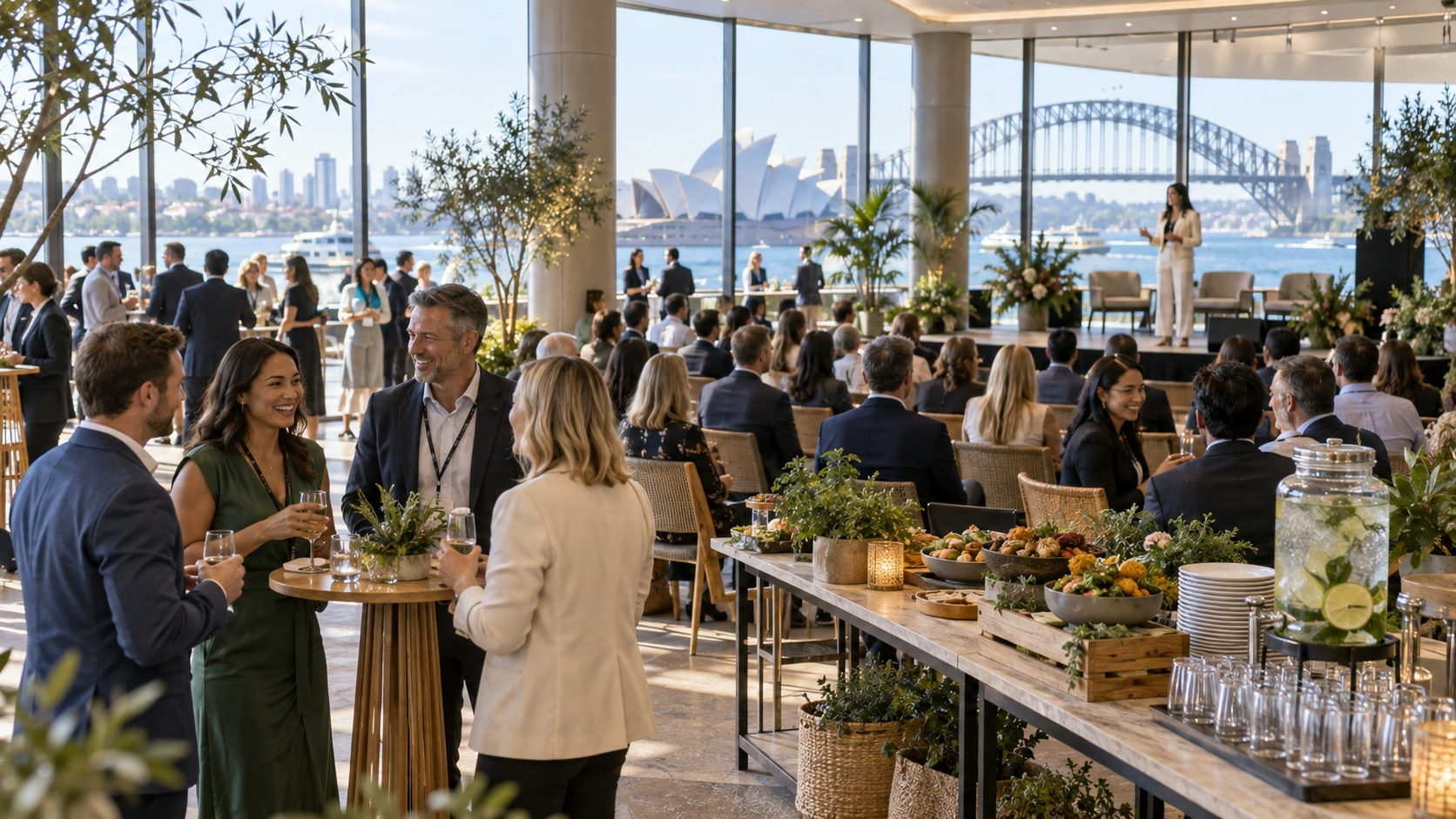
Beyond spectator events, Australia’s domestic business events sector has more than $1 billion in estimated delegate spend already secured through to 2033. The latest Domestic Forward Calendar 2026, released by the Australian Business Events Association, tracks 806 events representing more than 3,000 event days and 451,551 delegates.
ABEA Chief Executive Melissa Brown noted the broader value: “They provide opportunities to transfer knowledge, support research collaboration, foster innovation and connect people and industries across the country”.
The data underscores a simple truth: major events are not merely cultural moments—they are economic engines. With the pipeline secured through 2033, the question is no longer whether events deliver value, but how cities can compete to attract them.