


A Preventable Disease That Shouldn’t Exist
Rheumatic heart disease is entirely preventable. Yet in 2024, 93 per cent of acute rheumatic fever diagnoses in Australia were for Aboriginal and Torres Strait Islander people. Of those living with rheumatic heart disease on jurisdictional registers, 78 per cent were Aboriginal and Torres Strait Islander, 53 per cent were under 35, 82 per cent lived in remote or very remote communities, and 65 per cent were women. These figures, released by NACCHO, describe a disease that is effectively extinct among non-Indigenous Australians but continues to devastate Indigenous communities at epidemic proportions.
The launch of the Parliamentary Friends for Ending Rheumatic Heart Disease at Parliament House in March 2026 put governments on notice. Co-chaired by Matt Smith MP, Julian Leeser MP, and Allegra Spender MP, the group was established in partnership with NACCHO and the RHD Alliance to demand sustained, community-controlled action. The message was unambiguous: Aboriginal and Torres Strait Islander communities are already leading the solutions, and the evidence shows that Community Control delivers better outcomes.
The Evidence Is In: Community Control Works
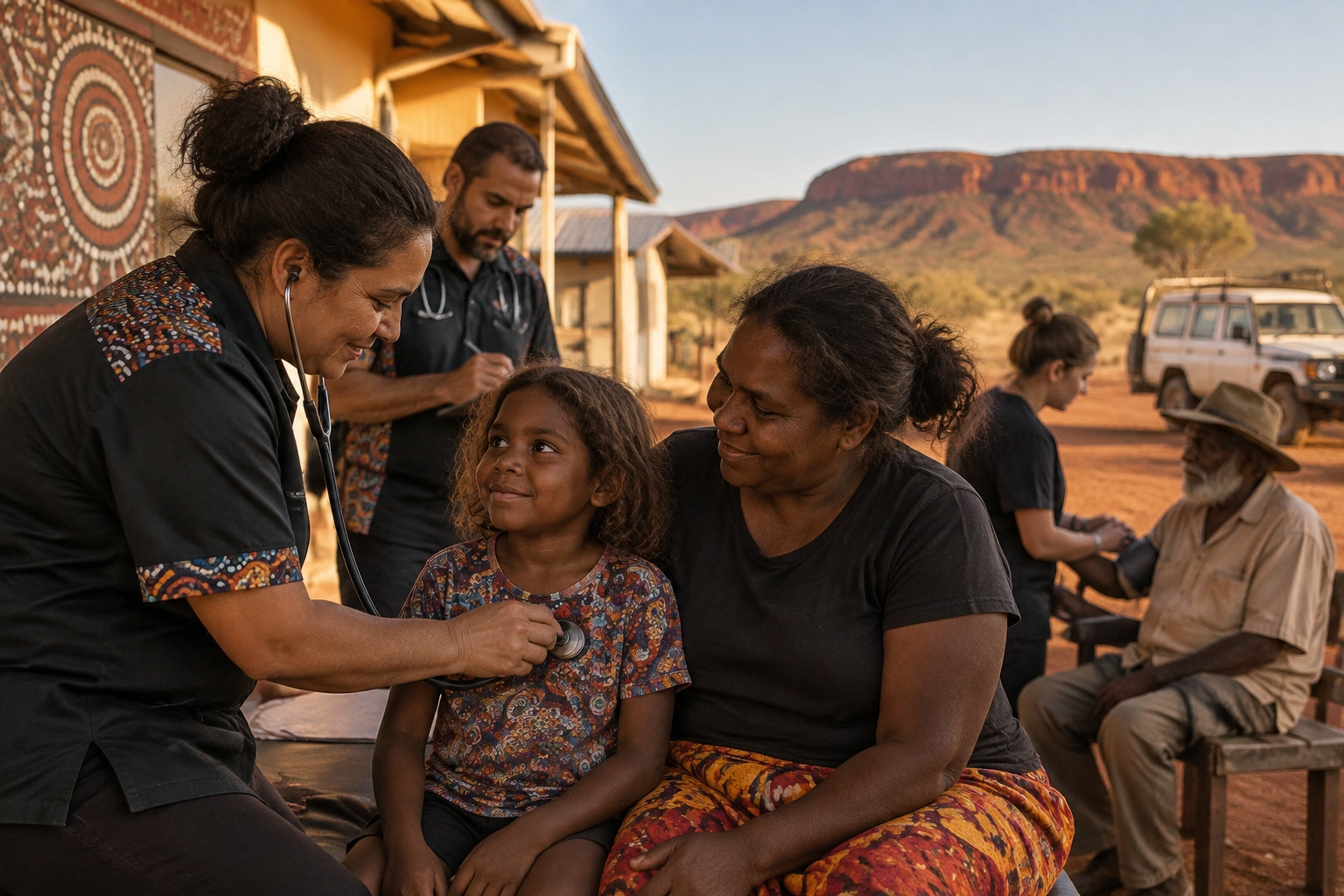
NACCHO is leading Australia’s first Aboriginal and Torres Strait Islander community-controlled, sector-led ARF and RHD Program. The program supports 29 Aboriginal Community Controlled Health Organisations reaching more than 100 clinics and homelands, with approximately 100 full-time equivalent roles across clinical, community, and environmental health. Since 2022, participating services have identified and treated more than 23,000 skin infections—the precursor to acute rheumatic fever. In 2024, 46.1 per cent of eligible ACCHO patients received at least 80 per cent of prescribed secondary prophylaxis, compared with just 32.4 per cent nationally. This is what community-led delivery looks like when it is properly backed.
NACCHO Chief Executive Officer Dawn Casey was blunt in her assessment: “Let’s stop pretending we do not know what works. We do. Community Control does it better, and the evidence is already there in the outcomes ACCHOs are delivering”.
The 2030 Target: Achievable Only with Real Investment
Australia has committed to eliminating rheumatic heart disease for Aboriginal and Torres Strait Islander people by 2030. NACCHO has made clear that this target will not be met with half-measures, short-term funding, or more talk. Dr Casey called on governments to “stop funding this work in short bursts and start backing the community-led solutions that are already making a difference”.
Meeting the 2030 commitment requires full action on the Priority Reforms under the National Agreement on Closing the Gap, sustained long-term investment, and genuine commitment to addressing the environmental determinants of health—including housing and access to culturally safe primary health care services. Rheumatic heart disease is a disease of poverty and disadvantage. It flourishes where overcrowded housing, limited access to clean water, and delayed medical care are everyday realities. Clinical interventions alone cannot eliminate it; the social determinants must be addressed with equal urgency.
The Bottom Line
The tools to end rheumatic heart disease in Australia already exist. The communities most affected have designed and are delivering the solutions. What is missing is the political will and financial commitment to scale these solutions to every community that needs them. Dr Casey’s words should echo through every policy discussion: “Community-led is not the add-on. It is the answer. Back it properly, or we will keep missing targets that should have been met years ago”.