
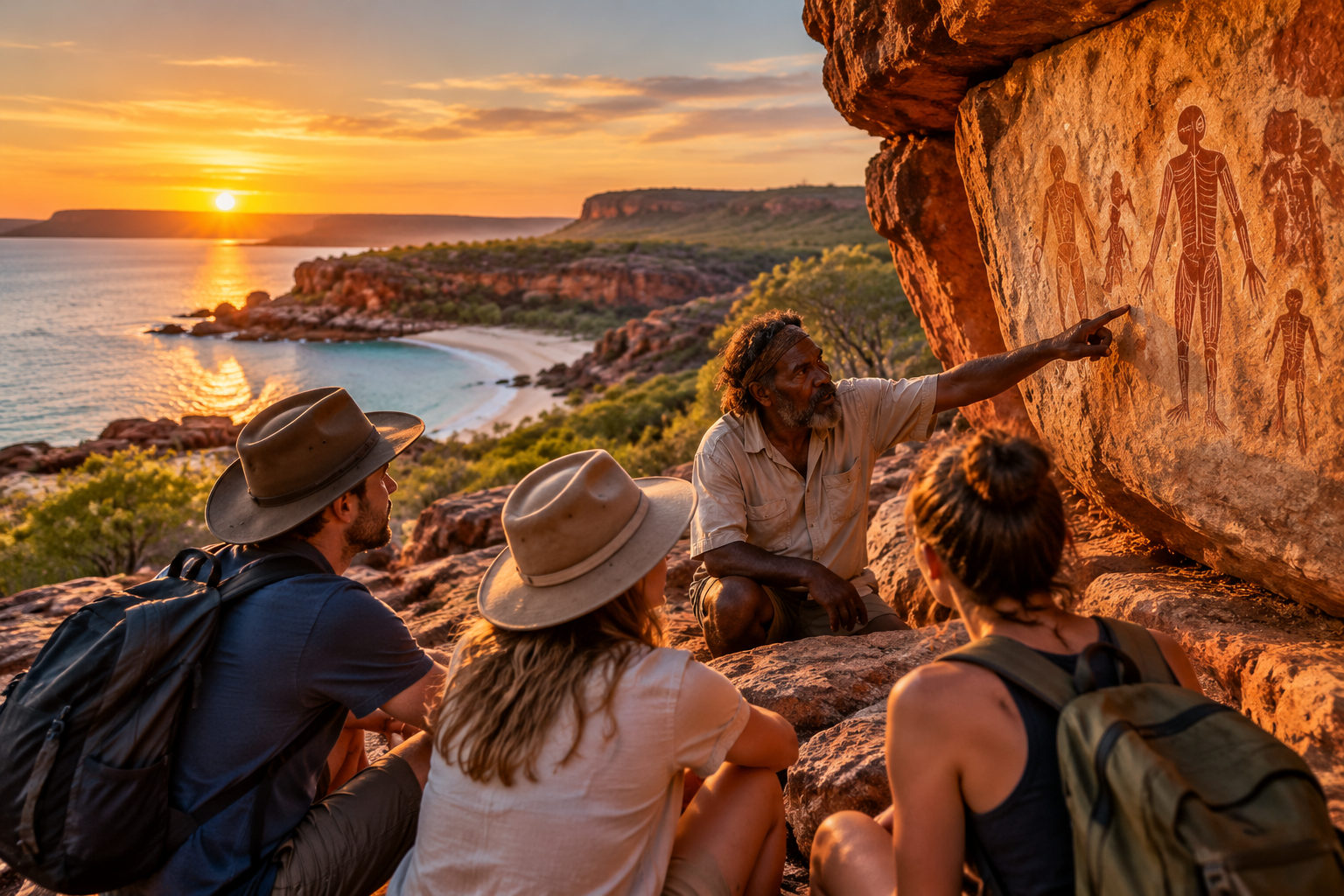
From ‘Human Zoos’ to Sovereignty
Indigenous culture stretches back more than 65,000 years, but the First Nations-run tourism sector in Australia has mostly been established within the past 40 years. Dr Skye Akbar, a Waljen woman and marketing researcher at the University of Adelaide, notes that prior to Indigenous-led offerings, earlier businesses played into the idea of “human zoos”.
“Unfortunately, from a marketing and branding perspective, Aboriginal and Torres Strait Islander people have had a really hard time advocating to have their industry seen as the wonderful and remarkable and authentic product that it is,” she said.
The New Wave of Indigenous-Led Experiences
Today, the landscape has transformed. In 2026, visitors can choose from:
- The Uluṟu–Kata Tjuṯa Signature Walk — a guided multi-day experience linking two Australian icons, operated by the Tasmanian Walking Company and launching in 2026.
- Bawaka Experience’s women-only journey in East Arnhem Land, launched in partnership with Australian Geographic Travel, reflecting growing demand for ethically grounded tourism.
- The Rocks Aboriginal Dreaming Tour in Sydney — a 90-minute Aboriginal-owned and led journey through Dreamtime stories in the heart of the city.
- Kingfisher Tours, offering immersive cultural tours into some of the world’s last wilderness areas, led by local Aboriginal guides who hold the stories and knowledge of the land.
The Demand Is There — But So Is the Gap
Tourism Research Australia data shows that First Nations tourism reached a record 3 million trips in 2023-24, double the level of a decade ago. However, Queensland’s new First Nations Tourism Strategy to 2032 highlights a striking demand-versus-awareness gap: while 82% of international travellers express interest in Aboriginal cultural experiences, only 12% know such experiences exist in Queensland.
The Road Ahead: Brisbane 2032 and Beyond
WAITOC chief executive Robert Taylor sees the Brisbane 2032 Olympic Games as a pivotal opportunity. “Coming up to the Olympics in 2032, I think there’s a fair bit of development work that needs to be done and it needs to be started now,” he said. A national First Nations Visitor Economy Partnership is also working to establish a permanent national representative body, signalling that Indigenous-led tourism is moving from the margins to the mainstream.